Blessed Beyond Measure: A Journey Into God’s Goodness

Be The First to Subscribe to my YouTube Channel!

I opened my Bible this morning to James 2:14–26, and even though I’ve read this passage many times before, something about it stirred me more deeply than usual. Maybe it was the quiet stillness of the morning, or maybe it was the way my soul has been reaching for God with such intensity lately, searching for clarity and direction. But as soon as I read, “What good is it, dear brothers and sisters, if you say you have faith but don’t show it by your actions?” (James 2:14, NLT), I felt the Holy Spirit pressing gently on the places in my heart that still need refining.


Christian Tech Nerd Quick Quiz!

Let’s see who can answer the below question correctly…..

If a woman has an abortion, can she still get into heaven?

TAP HERE FOR “YES, SHE CAN STILL FIND A WAY TO REDEMPTION”

TAP HERE FOR: “UNFORTUNATELY NO, YOU’LL SPEND ETERNITY IN HELL FOR HAVING AN ABORTION”


I recently stumbled upon a quote that said, “God blesses us because we respond to Him, not as a response to our good works.” I held onto that sentence like a precious jewel, because so often—even in my own walk with God—I’ve slipped into the mindset of trying to prove my transformation through what I do rather than who I’ve become in Christ. It’s so easy to confuse activity with spiritual maturity. And sometimes I wonder whether that’s why so many new believers get overwhelmed. They come into the faith with this beautiful spark of excitement, wanting so badly to honor God, but without knowing how to rest first in His love. They start volunteering, serving, signing up for everything in sight, hoping their efforts will show God they’ve changed. And then somewhere along the path, they burn out. I’ve seen it happen. I’ve felt it happen.

I think we, as the body of Christ, have unintentionally contributed to that misunderstanding. We often celebrate visible participation—the new church volunteer, the person who signs up for every ministry, the one who seems full of energy and eagerness—without first understanding where their heart is. Service is good and beautiful and holy, but service without foundation is like building a house on sand. It looks sturdy for a moment, until the first storm hits.

James is absolutely right: faith without deeds is empty. But deeds without faith are equally hollow. They may look impressive on the outside, but they don’t carry the substance of God on the inside. And that’s what struck me so strongly today—the reminder that my actions are not the proof of my faith; they are the fruit of my faith. Faith doesn’t begin with motion; it begins with surrender. It begins with falling at the feet of Jesus and whispering, “I can’t change myself. I need You to change me.”

Sometimes I forget that. Sometimes I slip into the rhythm of self-powered striving, almost like a spiritual New Year’s resolution. But faith isn’t a resolution; it’s a relationship. A living, breathing relationship with a God who moves through me rather than around me. When I try to do things for God without doing them with God, everything feels heavier and harder. But when the Holy Spirit stirs something in me—when I feel that gentle tug, that nudge that seems to rise from some quiet place inside my chest—obedience feels almost effortless. It feels like stepping into a river instead of trying to dig my own well.

That’s what good works are meant to look like. Not a performance, not a checklist, not a spiritual résumé—but a response. A natural overflow of the faith God has planted in me. And I love that God invites me into His work not because He needs my help but because He wants my heart. He wants my willingness, my surrender, my trust. He wants me to participate in the blessings He is already pouring out.

When I reflect on my journey with Him, I can see moments when I acted out of pure obedience to His voice, even when I didn’t understand why. And those are the moments that changed me the most. Not because I did something impressive, but because God used my small steps to shape my heart. That’s the kind of life I want—one where my faith is alive, vibrant, and continually responding to Him.

I feel blessed beyond measure not because of what I have, but because of who He is. His goodness has followed me through seasons of joy and seasons of grief, through times of clarity and times of confusion. Every time I’ve tried to take control, He has gently reminded me that surrender is my safest place. Every time I’ve grown weary, He has whispered, “Come to Me, all who are weary and burdened, and I will give you rest” (Matthew 11:28). And somehow, He always keeps His promise.

Today I prayed that He would teach me how to better encourage my brothers and sisters—not to rush into good works out of obligation, but to grow deeper in faith so that their works rise naturally from their relationship with Him. I want to be someone who reminds others of their identity in Christ before urging them toward activity. I want to show them that transformation starts with the heart, not the hands. I want to reflect Jesus in a way that draws them closer to Him, not simply closer to tasks.

And maybe that’s part of my own calling—helping others understand that God isn’t measuring their worth by their productivity. He’s looking at their hearts. He’s looking for faith that is alive, rooted, and real. Faith that breathes. Faith that trusts. Faith that produces action as naturally as a tree produces fruit in season.

As I sit here writing all of this, I realize how deeply grateful I am for the Holy Spirit’s guidance. There have been days when I felt Him nudging me toward someone who needed encouragement, or urging me to pray for a person I barely knew, or prompting me to step out in a way that stretched my comfort zone. Those moments were never born from my own willpower. They were born from His presence in me. And every time I said yes, I experienced God’s goodness in ways I never expected.

One thing I am learning, over and over, is that God doesn’t call me to do good works so that others will see how faithful I am. He calls me to do good works so they will see how faithful He is. When I respond to Him, when I let Him work through me, His love becomes visible. His compassion becomes tangible. His presence becomes undeniable. And somehow, in the midst of that, I am blessed too.

So today, Lord, I pray this from the depths of my heart:

Father, help me to always work in response to You—not from my own strength, not from my own will, but from the moving of Your Spirit within me. Teach me to recognize Your prompting and to obey with joy. Guard my heart from striving and remind me that true transformation comes only from You. Use me as a vessel of Your love, and let Your light shine through everything I do. And guide me as I walk alongside others in the body of Christ. Give me wisdom to encourage, patience to listen, and compassion to understand where their hearts truly are. Let Your living Word take root in us all, that it may grow and flourish in our lives. I ask all of this in the mighty name of Jesus, Amen.

Tonight I rest in the truth that I am blessed not because of what I do, but because of who God is—and because I get to respond to Him with a heart that is learning, growing, and trusting more every day.


How To Unlock Your Spiritual Christian Talents

Do you know that God has gifted you with unique spiritual talents?

That’s right. Every single one of us has received divine blessings given to us by God Himself.

But the question remains, have you unlocked these blessings yet?

When God created us, He didn’t merely mold us from dust.

He blessed us with His divine spirit, granting us unique spiritual strengths to discover, nurture, and use for His glory and the enrichment of others.

Unfortunately, many of us transverse our journey without realizing these strengths, much like a miner unaware of the diamonds beneath his feet.

People need to realize that each one of us has a role to play, a function to perform in the body of Christ.

And that comes from our unique spiritual strengths.

The simplest way to unlock these strengths, as well as your endless potential as a faithful Christian, is with prayer.

Seek God’s wisdom and ask Him to unveil your spiritual strengths.

As David prayed in Psalm 139:23, “Search me, O God, and know my heart; test me and know my anxious thoughts.” May this be our prayer too.

Self-reflection is also a critical step. What tasks come naturally to you? What do others often praise you for? Your strengths may be connected to these qualities.

Furthermore, pay heed to the insights of your spiritual community. Others often spot strengths within us that we may overlook.

However, it’s not just about recognizing your strengths. It’s about utilizing them.

Just as this important verse reminds us.

Do not conceal your strengths or bury them.

They were not provided for your sole advantage but to uplift others and glorify God.

Whether it’s prophecy, service, teaching, encouragement, generosity, leadership, or mercy, each of these strengths can be a powerful tool in God’s service.

Let’s embark on this divine journey of discovery together

And once we’ve recognized our strengths, let’s employ them to light up the world with God’s love.

CLICK HERE TO SEE WHAT THIS CUTE LITTLE BABY TELLS PRESIDENT TRUMP!

What The Last Supper Teaches Us About Eating Right

When you hear the words “The Last Supper,” what comes to mind?

A gathering of Jesus and His disciples, sharing a meal and fellowship.

A somber, poignant moment filled with love, lessons, and impending sacrifice.

Yet, amidst these deeply spiritual insights, there is a lesson that often goes unnoticed.

The Last Supper, that legendary event captured in scriptures and countless works of art, has something to teach us about eating right.

Let us remember it again.

Jesus and his disciples gathered around a table, eating a meal together.

They ate bread and drank wine, taking the time to enjoy their food and their fellowship.

This alone carries within it a blueprint for healthy eating that many of us overlook in our overly convenient food culture.

First, gathering and eating as a community.

Communal eating can improve our relationship with food and encourage healthier eating habits.

And yet, less than half of Americans eat with their families on the regular.

We should remember Jesus and His students, and eat with our loved ones as often as we can.

Next, we have to consider the concept of mindful eating.

At the Last Supper, Jesus gave thanks for the bread and wine before passing it to His disciples.

This display of gratitude and reflection can teach us to appreciate our food, be mindful of what we are consuming, and eat more slowly.

Lastly, the simplicity of the meal itself.

The Last Supper was not a feast of overly processed, unhealthy foods.

It was simple, wholesome, and nourishing. Qualities we should strive for in our meals.

The more we talk about the Last Supper, the more we find out about how we should eat.

As we navigate through our journeys, let us remember and apply its lessons to our daily experiences. Let’s strive to eat together, mindfully, and healthily.

And let’s always remember to appreciate God for the food He provides and for the sacrifice that Jesus made for us.

This Will Change Everything You Know About Fat Loss

If you’ve ever attempted to drop some bodyfat…

Then you might have tried what every “expert” out there recommends.

You know, the intense workouts and diets that you can’t possibly stick to for too long, and you end up gaining instead of losing weight.

Losing weight like this is almost impossible if you haven’t done it before.

That’s why most people who are overweight stay overweight.

However, what if I told you that the key to losing fat is not exercising yourself to death – or following extreme diets.

But breathing more.

That’s right, my friends.

A professor of Kinesiology at California State University in Fullerton just revealed that breathing is essential for fat loss.

And yet, you will not hear about this from anyone who is trying to sell you a fat loss or an exercise program.

If more people knew how simple losing fat actually is, then obesity would not be a concern in the US anymore.

You see, fat is made out of long carbon chains.

When we inhale, oxygen enters our system and becomes attached to some of that carbon.

And when we exhale, we breathe out carbon dioxide (CO2).

That’s how fat leaves our system.

This means that anything that makes you breathe harder makes you slim down.

Isn’t that incredibly simple?

And the most effective way to do that constantly over the years, no matter how you feel or how much time you have is by taking regular walks.

Walking doesn’t put any stress on your system.

You don’t experience a drop in energy afterwards, like you do with intense workouts.

(If anything, it makes you feel more energized).

And the most important thing, you are able to stick with it in the long run.

Our Lord has given everyone the ability to remain healthy and take care of their physical vessels.

And simply by taking brisk walks, we can chip away bodyfat without even realizing it.

If you prefer running, that’s fine too.

As long as you are able to keep at it for a long period of time.

So don’t listen to people who say you need to do any intense workouts or starve yourself to death.

Just eat in moderation and do something that makes you breathe slightly harder.

How To Protect The People You Love As A Christian (Updated 2024)

When people have a lot of stress, it can sometimes feel overwhelming.

Like the weight of the world is resting on their shoulders.

I’ve been there…

You’ve probably been there…

And as a Christian, I know that most people have experienced a terrible event in their lives that almost pulled them down to depression.

I constantly hear about it in my church.

There is, however, a simple thing we can do to protect these people from becoming depressed.

And by doing so, we protect ourselves as well.

If we support one another and lift each other up, then nothing can hurt us.

As believers in Christ, we are called to be a light in the darkness.

To help others and show them the love and grace of our Lord.

As it says in Matthew 5:14, “You are the light of the world.”

Scientists from Michigan University researched adults who were prone to depression, such as people who had lost their spouses.

And they discovered that simply reaching out to them in times of need can significantly protect them from becoming depressed.

This is an incredible reminder of the power of love and compassion.

It shows how much of an impact we can have on each other by simply being there for them.

As it is wonderfully explained in Galatians 6:2, “Carry each other’s burdens, and in this way, you will fulfill the law of Christ.”

This sums everything up perfectly.

As we navigate our struggles, let us remember to look to those around us who may need our help.

Whether offering a listening ear, a helping hand, or a word of encouragement…

Let us do what we can to lift up our brothers and sisters in Christ.

Remember, as the body of Christ, everyone is connected.

When one part of the body suffers, everyone suffers. 

When one part celebrates, everyone celebrates.

So let us be there for one another, and show the love of Christ to those around us.

If you don’t know what to say to someone you haven’t spoken to in a very long time,

Are You Giving For The Right Reasons?

I often see celebrities giving to charity on TV.

They give small amounts of wealth and make sure everyone sees it.

And while giving is a good thing to do, something just doesn’t sit right with me.

When they brag about it so much, it becomes more about the giver than the recipient.

However, as Christians, our motivation for giving shouldn’t be for fame or gratification.

It should be rooted in the belief that it is the right thing to do.

The Bible is clear on the importance of humility in giving. 

In Philippians 2, Paul urges Christians to “do nothing out of selfish ambition or vain conceit, but in humility consider others better than yourselves.”

This passage reminds us that when we give to the less fortunate, we should do so humbly, putting the needs of others before our own.

It is important to remember that when we give to the less fortunate, we are also lending to the Lord.

And in doing so, we will be rewarded for our kindness and humility.

Proverbs 19:17 states, “He who is kind to the poor lends to the Lord, and he will reward him for what he has done.” 

It is easy to become caught up in the idea of giving for personal gain or recognition, but that is not the true spirit of giving. 

Giving should be done with a pure heart and a humble attitude.

As Christians, we are called to be good stewards of the resources and blessings that God has given us. 

Part of being a good steward is using our resources to help those in need.

It is not about how much we give, but rather the attitude with which we give. 

So let us give with humility, knowing that we are not just giving to the less fortunate, but living according to God’s Will.

Let us be reminded that true giving is not about us.

And let us give with a humble heart, knowing that we are blessed to be a blessing to others.

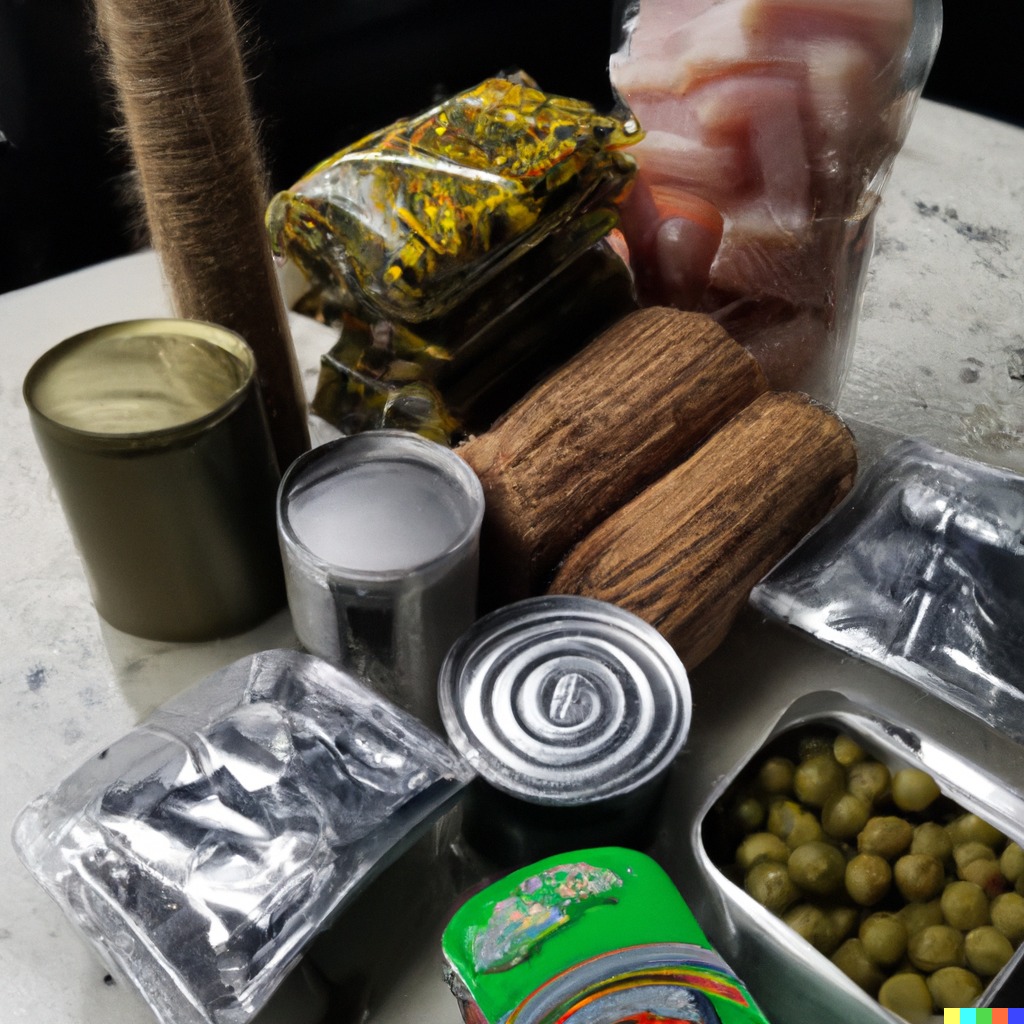
How to Whip Up Delicious Meals From Foraged Foods

My fellow Christians, if you’ve been reading my Christian blog for a while, then you know that I’m not simply trying to barely endure difficult situations.

I’m honestly looking for ways to live conveniently, and even thrive when everything around us seems to fall apart.

When people usually talk about foraged foods, they ask questions like “Can I eat that?” or “How many calories does this have?”

But have you ever considered that making gourmet, delicious meals out of foraged ingredients is possible?

That’s right, folks. Gourmet meals in an emergency situation.

I know, it seems far fetched when our minds are usually focused on the bare essentials. 

But the thing is, it doesn’t always have to be about getting by on the bare minimum.

Nature is a veritable pantry, overflowing with a variety of edible plants, roots, and berries.

Sure, it requires a keen eye and knowledge of what you can safely consume.

But once you’ve got a handle on it, then turning foraged foods into meals that others would lust on even in regular times is easier than it sounds.

Let’s talk basics first.

Learning to identify edible plants is essential.

Take the time to familiarize yourself with local flora and fauna.

Next, experiment. You might find things you don’t expect.

For example, did you know you can make a pretty damn good faux potato salad with Jerusalem artichokes?

Or a stew thickened with acorn flour?

You see, enjoying foraged foods is not that complicated, as long as you are willing to try different things.

But there’s a catch.

For this to be possible, there is something you need to learn how to do.

And that’s cooking without your familiar kitchen gadgets. You might not always have them.

That’s where primitive cooking methods can come in handy.

Folks, finding ways to enjoy ourselves when things go south is another aspect of prepping.

Let’s go beyond merely living. Let’s thrive and dine like kings in the wilderness.