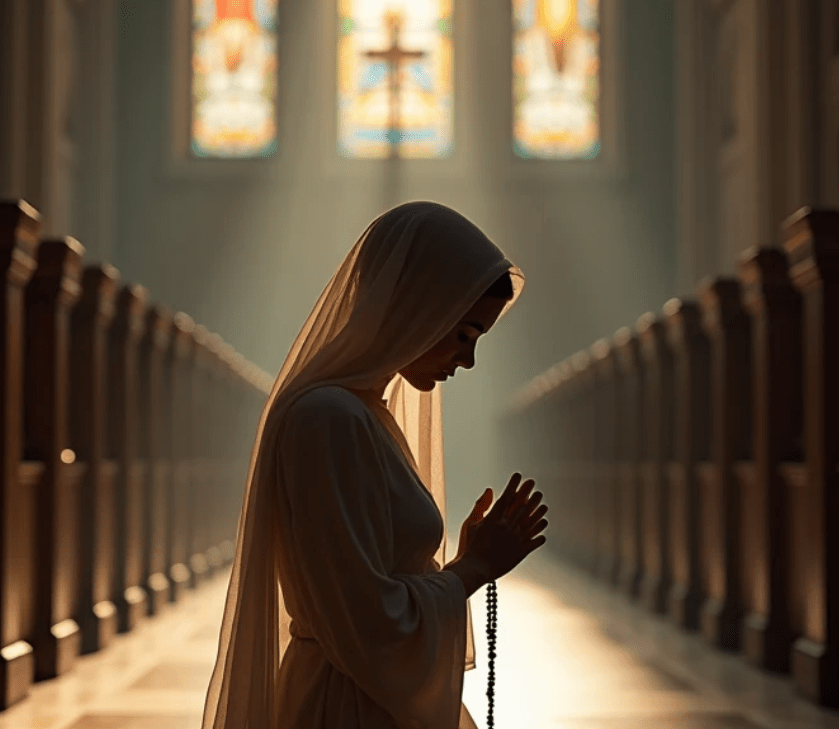
The Devil Strikes When You’re Spiritually Exhausted

Have you ever noticed how much harder it is to resist temptation at night? I’ve been thinking about this a lot lately—especially when I find myself wandering into the kitchen at 9 or 10 p.m., looking for a “little treat.” It seems so small in the moment—a bowl of ice cream, a bag of chips, just a bite of something sweet. But behind that craving, there’s often something deeper stirring.

Why is it so hard to say no to the things we easily resist during the day?

During daylight hours, we’re alert. We have routines, structure, and usually more mental strength to make good decisions. But as the sun sets and we wind down, something shifts. That sense of control we held earlier begins to fade. And we convince ourselves that a late-night indulgence is no big deal.

But the truth is, this moment—this weariness—is exactly when the enemy whispers the loudest.

Scripture warns us about this. 1 Peter 5:8 tells us, “Be alert and of sober mind. Your enemy the devil prowls around like a roaring lion looking for someone to devour.”

Satan doesn’t come after us in our strongest moments. He waits. He watches. He knows when our defenses are down—when we’re tired, overwhelmed, lonely, or distracted. He knows that by the end of the day, our willpower has been worn thin by decision fatigue, stress, and even spiritual neglect.

And he seizes those moments to strike.

Not always with something obviously sinful. Sometimes, it’s as subtle as distracting us from prayer. Pulling us toward isolation. Feeding us lies that sound like truth. Or simply luring us into habits that slowly dull our sensitivity to God’s voice.

Late-night snacking might not seem like a spiritual issue at first glance. But if we dig deeper, it reveals a pattern: the temptation to self-soothe instead of turning to God. The temptation to indulge in temporary pleasures instead of abiding in lasting peace.

We’ve all been there. And I don’t say this to bring shame—I say it to shine a light on the pattern, because darkness loses its power when it’s exposed to truth.

Ephesians 6:11 says, “Put on the full armor of God, so that you can take your stand against the devil’s schemes.”
And verses 13–17 go on to describe that armor in beautiful detail:

  • The belt of truth
  • The breastplate of righteousness
  • The shoes of the gospel of peace
  • The shield of faith
  • The helmet of salvation
  • The sword of the Spirit, which is the word of God

But armor is only useful if we actually put it on and learn to use it.

That means praying before the battle begins. That means studying the Word before temptation comes. That means preparing our minds and hearts for the spiritual fight we might not even see coming.

So often we think we’ll have the strength to resist temptation when it arises, but God calls us to prepare in advance.

Lord, teach me to wear Your armor daily. Help me recognize the enemy’s tactics—not just the obvious ones, but the subtle ones that slip in when I’m weary. Strengthen my spirit so that I won’t depend on my own strength, but on Yours. When I feel weak, remind me that You are strong.

We don’t fight this battle alone. God hasn’t left us to navigate temptation in our own power. In 2 Corinthians 12:9, the Lord says, “My grace is sufficient for you, for my power is made perfect in weakness.”

Even when our willpower fades, His strength remains constant.

Still, we have a part to play. God gives us wisdom to build healthy habits that protect and strengthen us. Simple choices—like going to bed earlier, avoiding late-night TV that stirs unhealthy desires, or keeping our devotional time consistent—can make a big difference. Regular sleep, movement, nourishing food, and staying in community with other believers are all ways to guard our hearts and bodies.

Proverbs 4:23 reminds us, “Above all else, guard your heart, for everything you do flows from it.”

So, when I feel those cravings creeping in late at night, I’m learning to pause and ask myself: What am I really hungry for?

Sometimes, it’s rest. Sometimes, it’s comfort. Sometimes, it’s connection or even worship. And none of those things can truly be filled with sugar or snacks or scrolling through my phone.

Only God satisfies. Psalm 107:9 says, “For he satisfies the longing soul, and the hungry soul he fills with good things.”

Jesus, You are my portion. Fill the empty places in me that I try to satisfy with temporary things. When I feel pulled toward things that aren’t good for me, remind me that You offer better. Help me build a life that honors You—even in the small, quiet choices no one sees.

I’m also reminded tonight that we are never meant to resist temptation alone. One of the greatest gifts God gives us is the Church—a community of people walking through the same struggles, cheering each other on, and holding each other accountable.

James 4:7 gives us both instruction and promise: “Submit yourselves, then, to God. Resist the devil, and he will flee from you.”

So tonight, I submit again. My mind, my body, my heart. I surrender my weakness, my late-night cravings, my thoughts, and my routine.

And I take this moment to put on the armor. Not just for tonight, but for every battle still ahead.

Heavenly Father,
Thank You for never giving up on me. Thank You for staying close, even when I wander. Strengthen me to live for You—not just in the big moments, but in the tiny ones that build a life of faith. Help me to see temptation clearly, to resist it fiercely, and to cling to You constantly. You are my source, my hope, and my victory. In Jesus’ name, Amen.


If you’re reading this and feeling discouraged by your own areas of weakness—please know, you’re not alone. And more importantly, you are not powerless. With God, we have every tool we need to stand strong.

Let’s keep fighting the good fight—together.

Love,
A Sister in Christ, Learning to Lean on Him Night and Day 💛

Now More Than Ever: The Sacred Calling of Motherhood

As I reflect on Mother’s Day this year, my thoughts are filled with gratitude for the incredible woman who has shaped so much of who I am—my mother. Though I’m not a mother myself yet, I see so much beauty and purpose in the role of motherhood, not just through the lens of what I’ve experienced as her daughter, but also through the understanding that it’s a sacred, soul-shaping calling designed by God. In my own life, I’ve seen firsthand how motherhood, with all of its challenges, joys, sacrifices, and blessings, is far more than “just” a job—it is part of God’s redemptive plan.

Genesis 3:16 tells us that, as a result of the fall, women would bear children “in pain and sorrow.” While this verse speaks of the reality of the struggles that come with motherhood, it also hints at the profound purpose within that pain. It is easy to view motherhood as a series of struggles, from the physical demands of pregnancy to the exhaustion of sleepless nights and the weight of trying to raise a child who walks in God’s ways. But I’ve come to understand that, as difficult as it can be, it is a pain with purpose. This purpose goes far beyond the momentary struggles—it’s the eternal impact motherhood has on shaping future generations for God’s Kingdom.

When I think of my own mother, I see how much sacrifice and love she poured into raising me and my siblings. I know that every day, she made choices that were not just for the moment, but for eternity. Proverbs 31:28 says, “Her children rise up and call her blessed; her husband also, and he praises her.” And I’ve done just that. I’ve risen up to praise my mom because of the sacrifices she made in raising me, even when it wasn’t easy, even when the days felt long and the challenges felt never-ending.

Motherhood is far more than just physical labor—it’s spiritual, emotional, and relational labor. It’s a divine calling that echoes God’s redemptive plan for humanity. The Bible tells us that children are a blessing from the Lord. Psalm 127:3 declares, “Behold, children are a heritage from the Lord, the fruit of the womb a reward.” There is no greater privilege than the role of a mother, and my mom has shown me the depth of that calling.

I’ve seen how my mother, though not perfect, has poured out her heart, her prayers, and her love into shaping me. She’s been a living testament to the idea that motherhood is not a task of “just” raising children, but of shaping future generations—future world-changers who will carry on God’s love and truth. Every sacrifice she made, every sleepless night, every tear shed in prayer for her children—it all matters.

I am reminded of 1 Timothy 2:15, where Paul says, “But women will be saved through childbearing—if they continue in faith, love, and holiness, with self-control.” This verse isn’t about earning salvation through childbirth, but rather, it speaks to the sanctifying process of motherhood. It refines women, molding them into more patient, selfless, and faithful beings. My mom’s love for God and us has shaped who I am today, and I know that her journey of motherhood has been one of growth, faith, and reliance on God.

There’s a deep joy in motherhood, even amid the chaos. As a daughter, I see the joy my mother finds in us—even when life is messy. Nehemiah 8:10 says, “The joy of the Lord is your strength.” And I see my mom finding joy in the Lord, even in the mundane moments of motherhood. Yes, there are piles of laundry, long nights, and tough seasons, but there are also moments of pure joy—the sound of a child’s first words, the simple joy of watching them grow and learn, and the fulfillment that comes from guiding them through life’s challenges. I know my mother found joy not just in my successes, but in the very act of raising me.

I’ve also realized that while motherhood can be painful and sacrificial, it is never without purpose. God designed motherhood as a partnership with Him in bringing life into the world. As I look to the future, I believe that even when the challenges of raising children seem daunting, God has a bigger picture in mind. Isaiah 55:8-9 reminds us, “For my thoughts are not your thoughts, neither are your ways my ways, declares the Lord. For as the heavens are higher than the earth, so are my ways higher than your ways and my thoughts than your thoughts.” As mothers, we may not always see the fruit of our labor immediately, but we can trust that God is at work in the lives of our children, even when we can’t see it.

It’s clear to me now that motherhood is a calling that goes beyond a simple role—it is a sacred vocation that shapes the future. I may not yet be a mother, but I can see that the role is one of immense responsibility and profound purpose. Motherhood is a partnership with God to shape the next generation. Each mother is raising not just children, but image-bearers of God, future leaders, and world-changers.

As I reflect on my mom and all the ways she’s shaped my life, I’m reminded of Proverbs 22:6, which says, “Train up a child in the way he should go; even when he is old he will not depart from it.” This verse isn’t just for mothers, but for all who have influence over the next generation. The way my mom has modeled love, faith, and strength in Christ will have a ripple effect for generations to come.

So, to my beautiful mom, and to all mothers out there, I want to say thank you. Thank you for your sacrifices, your love, your patience, and for answering God’s call to raise His children. Your work matters. It’s not “just” raising children—it’s shaping the future for God’s glory.

Prayer:

Heavenly Father, thank You for the gift of motherhood and for the example of love and strength that my mother has shown me. I pray that You continue to bless all mothers, giving them the wisdom, strength, and grace they need to raise their children in Your ways. Help me to honor them and to remember the profound impact they have on shaping the future. May we all recognize the sacred calling of motherhood and trust in Your plan for our lives. In Jesus’ name, Amen.

How to Be a Shield for Your Loved Ones Through Christ

Stress can be overwhelming. The kind that feels like the weight of the world is resting squarely on your shoulders, threatening to pull you down. I’ve been there—maybe you have too. Those moments when the pressure feels unbearable, and it’s hard to see the way forward. As Christian women, we know that life isn’t always smooth sailing. Most of us, at some point, have experienced hardship so great it nearly pulled us into the depths of despair or even depression. I hear it often in my church, as many of us carry burdens we sometimes feel are too heavy to bear alone.

But there’s good news. In those times of difficulty, there is something simple yet powerful we can do—something that not only helps those around us but also protects ourselves. That thing is support. When we lift each other up, when we reach out to those in pain, we not only help them find healing but also strengthen our own hearts in the process. As believers in Christ, we are called to be a light in the darkness. By showing God’s love and grace to others, we fulfill His command and find joy in being instruments of His peace.

The Power of Being a Light in Darkness

Jesus calls us to be a light in the world. In Matthew 5:14, He reminds us, “You are the light of the world. A town built on a hill cannot be hidden.” This is not just a command, but a calling to step out of our comfort zones and shine God’s light into the lives of those who need it most. When others around us are struggling—whether with grief, anxiety, depression, or the daily burdens of life—we are called to reflect the love of Christ and to show up for them.

I believe there is a unique power in showing up for someone during their darkest moments. It doesn’t require us to have all the answers or even say anything profound—it simply requires our presence and willingness to care. Even a small act of kindness, a listening ear, or a prayer can make a world of difference.

The Science Behind Reaching Out

It’s not just a Christian idea to help those in pain. In fact, science has long confirmed the importance of reaching out to those who are vulnerable. A study conducted by Michigan University explored the effects of social support on people prone to depression, particularly individuals who had experienced the loss of a spouse. They found that those who received support during these vulnerable times were much less likely to slip into depression than those who were isolated.

This is a powerful reminder of the impact that simply being there for someone can have on their mental and emotional health. It’s not just about offering advice or solving their problems—it’s about showing them that they are not alone. That, in itself, is a profound and life-giving gift. The love of Christ works through us in those moments of support, and it’s a reminder that we are called to be instruments of healing in each other’s lives.

Carrying Each Other’s Burdens

The Bible is full of wisdom about the importance of supporting one another. In Galatians 6:2, Paul urges us to, “Carry each other’s burdens, and in this way, you will fulfill the law of Christ.” This verse sums up the heart of Christian community. We are not meant to live in isolation; we are meant to walk alongside each other, sharing in the joys and the sorrows of life. When one of us suffers, we all suffer, and when one rejoices, we all rejoice.

It’s easy to get caught up in our own struggles and forget about those around us. But as Christians, we are called to look outside ourselves and notice the pain and needs of others. We are called to step into the messiness of life and offer help, love, and encouragement. Whether it’s a listening ear, a word of encouragement, a prayer, or a practical act of service—every little thing we do can make a difference.

Practical Ways to Lift Others Up

If you feel uncertain about how to support someone who is struggling, don’t worry. The Bible gives us plenty of examples of ways we can be there for one another. Here are some simple and practical ways to lift up those in your life who may be carrying heavy burdens:

  1. Reach Out with a Message or Phone Call
    Sometimes, just letting someone know you are thinking of them can be a lifeline. Send a text, make a phone call, or write a simple note to let them know you care. In 1 Thessalonians 5:11, we are encouraged to “encourage one another and build each other up.” A small act of reaching out can remind someone they are not alone.
  2. Listen Without Judgment
    When people are struggling, they often just need someone to listen. In James 1:19, we are reminded to be “quick to listen, slow to speak, and slow to become angry.” Sometimes the best way to help is to simply sit with someone and listen to their heart. Let them express their feelings, without feeling the need to fix everything.
  3. Offer a Prayer
    One of the most powerful ways we can support someone is through prayer. In Philippians 4:6, Paul tells us, “Do not be anxious about anything, but in every situation, by prayer and petition, with thanksgiving, present your requests to God.” Praying for others and with them brings the peace of God into their lives and invites His healing presence.
  4. Serve with a Helping Hand
    In Galatians 6:9, we are reminded not to grow weary in doing good. If you know someone is overwhelmed with their daily responsibilities, offer practical help. Maybe you can cook a meal, help with household chores, or offer to watch their children for a few hours. Small acts of service can go a long way in showing God’s love.
  5. Encourage with Scripture
    Sometimes, the best way to encourage someone is to point them to the promises of God’s Word. Whether it’s sharing a Bible verse or sending them a Scripture card, the Word of God has the power to comfort, heal, and restore. Isaiah 41:10 reminds us, “Do not fear, for I am with you; do not be dismayed, for I am your God.”

A Prayer for Strength and Support

Heavenly Father,
Thank You for Your endless love and grace. You are our refuge and strength, an ever-present help in times of trouble. I pray for my sisters in Christ who are struggling with stress, sadness, or burdens that feel too heavy to bear. Lord, surround them with Your peace and remind them that they are not alone. Use me to be a source of encouragement and support to those in need. Help me to be quick to listen, slow to speak, and eager to serve. May Your light shine through me as I walk alongside those who need Your love.
In Jesus’ name, Amen.

Conclusion: We Are Stronger Together

As Christian women, we are called to be a community of support and encouragement. When one part of the body suffers, we all suffer. But when we stand together in love and grace, we lift each other up and bring glory to God. Remember, we are stronger together. Let’s take time each day to notice the needs of those around us and offer the support, love, and care that will help them carry their burdens.

May God bless you as you continue to be a light in the darkness and a source of strength for those who need it most.

Pope Trump Isn’t Offensive To Christians, Abortion Is!

When the World Gets It Backward: Pope Trump Meme vs. the True Offense

This morning started like most others—I brewed my coffee, opened the curtains to let in the soft morning light, and flipped on the TV for a few minutes of news while I settled into the Word. But what I saw today unsettled my spirit. A reporter—stone-faced and full of smugness—asked President Trump if he thought his “Pope Trump” social media post was offensive to Christians.

I nearly spilled my coffee.

Offensive to Christians? I wanted to yell at the screen, “No, abortion is offensive to Christians!”

I sat there stunned, not because I hadn’t heard this kind of media manipulation before, but because it still cuts deep every time they twist what matters. They mock faith with one hand and defend the killing of the unborn with the other—and then have the audacity to claim they’re standing on moral high ground?

What breaks my heart more is knowing how many people watch that same program and nod in agreement. How many people are conditioned to think that a meme or a nickname for a political leader is somehow more scandalous than the destruction of millions of innocent lives.

Lord, have mercy on us.

I felt compelled to go to the Word. I opened my Bible and landed in Proverbs 17:15, which says: “He who justifies the wicked and he who condemns the righteous are both alike an abomination to the Lord.”

And that’s what we saw on display this morning. Justification of wickedness. Condemnation of righteousness. People scandalized by sarcasm or titles—but silent about babies torn apart in the womb.

Father, awaken the conscience of this nation.

As I prayed, I thought of Isaiah 5:20: “Woe to those who call evil good and good evil, who put darkness for light and light for darkness.” How clearly we are living in those days. What is holy is mocked. What is evil is protected by law and championed by influencers.

The reporter didn’t want to talk about abortion. That would’ve been uncomfortable. That might’ve exposed the real offense. Instead, they chose to paint Christians as delicate little flowers who can’t handle satire—but the truth is, we’re not offended by posts. We’re wounded by sin. We’re grieved by murder.

I don’t think Trump calling himself “Pope Trump” was some theological statement. It was political irony. Maybe even poor taste. But certainly not the kind of moral offense that should headline a broadcast.

But abortion… oh Lord, abortion is a sin that cries out to heaven.

In Genesis 4:10, after Cain murdered Abel, God said: “The voice of your brother’s blood is crying to me from the ground.” I believe the blood of these innocent children cries to God too. And if it breaks His heart, it should break ours even more.

So I sat there, Bible in my lap, asking God to help me see clearly and not get caught up in the noise. We are surrounded by distractions—headlines, hashtags, and hollow arguments. The enemy knows if he can keep us offended by trivial things, we won’t have energy left to stand against true evil.

Dear God, give me courage to speak when I’m tempted to stay silent. Give me discernment to know what truly matters. Let me not be distracted by the theatrics of this age.

I kept praying:

“Jesus, forgive this nation. Forgive us for our silence, for our distraction, for the ways we have allowed the culture to dictate our values instead of Your Word. Let us not be ashamed of Your truth, even when it’s unpopular. Even when we’re mocked. Even when they try to cancel us. Lord, give us strength like Daniel, like Esther, like Paul. We don’t want to offend man—we want to honor You.”

After I calmed down, I realized something. The reporter’s question—while frustrating—was also a reminder. A reminder that we are not at home in this world. The media doesn’t speak our language. They don’t share our values. They don’t understand our grief. And that’s okay. We’re not called to be liked. We’re called to be faithful.

Romans 12:2 came to mind: “Do not be conformed to this world, but be transformed by the renewal of your mind.”

So I renewed my mind this morning. I turned off the TV and turned to prayer.

I wept. I prayed for the unborn. I prayed for our leaders. I even prayed for the reporter. And I prayed for my own heart—that I wouldn’t become bitter or jaded, but tender and ready to speak truth in love.

And now, as I write this, I feel peace.

Not because the situation is fixed. Not because the media has changed. But because Jesus is still King, and He is not silent. He sees. He knows. He will bring justice.

In the meantime, I’ll keep writing. I’ll keep praying. I’ll keep standing.

Even if they call us foolish. Even if they misrepresent our faith. Even if they say, “Christians are offended by Trump’s jokes,” while ignoring the cries of the unborn—I will not be moved.

Because the real offense is not a meme.

The real offense is the sin that separates us from God—and the apathy that lets it flourish.

Lord, forgive us. Revive us. Make us bold again.

Finding Light in Darkness: Uplifting Bible Verses for Hope

In our lives, there are moments when darkness seems overwhelming—when grief, uncertainty, or hardship threatens to swallow our peace. During these times, it can feel as though hope is distant or even gone. But Scripture reminds us that God’s light never stops shining, even in the darkest valleys. His promises are sure, His presence is constant, and His Word offers us unshakable hope.

Let’s take a gentle journey through the Word of God, reflecting on His promises, and offering prayers for comfort, healing, and renewed hope.

1. God Is With You in the Darkness

“Even though I walk through the valley of the shadow of death, I will fear no evil, for you are with me; your rod and your staff, they comfort me.”Psalm 23:4 (ESV)

This beloved psalm reminds us that God doesn’t leave us when times get hard. He walks beside us. Whether you’re grieving a loss, facing uncertainty, or battling anxiety, take comfort in knowing you are not alone.

Prayer:
Lord, even in the darkest valley, I believe You are with me. Help me feel Your comforting presence. Hold my heart and strengthen my spirit. Shine Your light over my life. Amen.

2. Hope Anchored in God’s Promises

“Let us hold unswervingly to the hope we profess, for he who promised is faithful.”Hebrews 10:23 (NIV)

Hope isn’t wishful thinking; it’s confident trust in the character of God. When everything around us is uncertain, we can stand on the rock of His Word. He is faithful. He cannot lie. What He has promised, He will fulfill.

Prayer:
God, I choose to hold tightly to the hope I have in You. When I am weary, remind me of Your faithfulness. Help me to trust Your promises even when I cannot yet see the outcome. Amen.

3. Light Always Overcomes Darkness

“The light shines in the darkness, and the darkness has not overcome it.”John 1:5 (NIV)

Jesus is the light of the world, and no darkness can overpower Him. When fear, despair, or sorrow surround us, His light is stronger. Sometimes all we can do is whisper His name—and that is enough. He is near.

Prayer:
Jesus, You are the Light that darkness cannot overcome. Fill every shadowed place in my life with Your presence. Replace my fear with Your peace and my sorrow with Your joy. Amen.

4. Strength When You Feel Weak

“But those who hope in the Lord will renew their strength. They will soar on wings like eagles; they will run and not grow weary, they will walk and not be faint.”Isaiah 40:31 (NIV)

Our strength is limited, but God’s is boundless. When our own efforts fail, when we feel too tired to keep going, God invites us to wait on Him—and He promises to renew our strength.

Prayer:
Father, I am weary. I feel like I cannot take another step. But I wait on You now, and I ask You to carry me. Renew my strength. Help me to soar again, not by my power but by Yours. Amen.

5. Peace Beyond Understanding

“And the peace of God, which surpasses all understanding, will guard your hearts and your minds in Christ Jesus.”Philippians 4:7 (ESV)

Sometimes, peace doesn’t come from our circumstances improving—it comes from knowing God is in control, even when we are not. His peace quiets the soul and guards the heart like a shield.

Prayer:
Lord, guard my heart with Your peace. When anxiety or fear threatens to take over, help me return to Your presence. Quiet my mind. Cover me with the peace that only You can give. Amen.

6. God’s Plans Are Still Good

“‘For I know the plans I have for you,’ declares the Lord, ‘plans to prosper you and not to harm you, plans to give you a hope and a future.’”Jeremiah 29:11 (NIV)

In seasons of waiting or pain, it can be hard to believe God still has a plan. But His Word assures us: our story isn’t over. His plans are not to harm us, but to bring us to a good and hopeful end.

Prayer:
Heavenly Father, when I can’t see the way forward, help me remember that You are writing my story. I trust Your plans, even when I don’t understand them. Guide me toward the future You’ve prepared. Amen.

7. Comfort for the Brokenhearted

“The Lord is close to the brokenhearted and saves those who are crushed in spirit.”Psalm 34:18 (NIV)

Grief and sorrow are not foreign to God. He is near to those who are hurting. When your spirit is crushed, He doesn’t turn away—He leans in closer.

Prayer:
Lord, my heart is heavy. I bring You my broken pieces. Sit with me in my pain and begin the healing only You can bring. I trust You to comfort me and restore joy in time. Amen.


Final Encouragement

Dear friend, if you’re walking through darkness today, remember this: you are not walking alone. God is still with you. His Word is alive, and His light still shines. Take each verse and prayer into your heart. Read them aloud. Meditate on them. Let them become your lifeline.

Sometimes hope doesn’t arrive all at once—it grows slowly like the dawn, one ray at a time. Keep looking up. Keep seeking Him. The darkness will lift. Light is coming.

“May the God of hope fill you with all joy and peace as you trust in him, so that you may overflow with hope by the power of the Holy Spirit.”Romans 15:13 (NIV)

The Real Reason the Left Is Intimidated by Christians

I’ve tried to stay quiet. I’ve tried to keep my head down and live peaceably, like Scripture teaches. But there comes a point when silence feels like complicity. And today… today I’m fed up.

I opened a news app this morning, and there it was—another headline about how “religion has no place in the public square.” Another politician, another influencer, another self-righteous talking head wagging their finger at Christians for having the audacity to believe that our faith should inform the way we live—and vote, speak, and lead.

It’s not just that they want us quiet in the pews. No, they want us silent everywhere. And if they can’t silence us? They’ll censor us.

Big Tech—those self-appointed moral overlords—are doing just that. Editing sermons, deplatforming pastors, flagging Scripture as “hate speech.” You can post nearly anything online these days—filth, lies, propaganda—but quote Romans 1, or say “Jesus is the only way,” and suddenly you’re violating “community standards.”

Whose community, exactly? Certainly not the body of Christ.

Isaiah 59:14-15 could have been written about our culture today:

“Justice is turned back, and righteousness stands far away;
for truth has stumbled in the public squares,
and uprightness cannot enter.
Truth is lacking,
and he who departs from evil makes himself a prey.”

That’s it. That’s the world we’re in now. Speak truth, and you become the hunted. Refuse to go along with the narrative, and you’re branded intolerant, dangerous, even hateful.

But I won’t apologize for standing on God’s Word. I won’t “evolve” to appease people who celebrate sin and demand silence from the saints.

I’m tired of being told that my beliefs don’t belong in public. My faith isn’t a hobby—it’s who I am. It governs my conscience, my values, my decisions. You don’t get to tell me to keep it hidden while waving your ideology like a battle flag in every school, courtroom, and platform.

It’s all so backwards. They say they’re the tolerant ones, but they can’t even tolerate a Bible verse. They say they’re for freedom of expression—unless the expression involves Christ crucified. They say they want diversity—until a Christian speaks up.

What they really want is dominion. A godless, sanitized public square, scrubbed clean of every cross, every prayer, every conviction that challenges their golden calf of self-worship.

Well, I’ve had enough.

Galatians 1:10 echoes in my mind:

“For am I now seeking the approval of man, or of God? Or am I trying to please man? If I were still trying to please man, I would not be a servant of Christ.”

I choose God. Every time. Let them mock. Let them ban me. Let them shadowban every verse I post or every truth I speak. I refuse to let them shame me into silence.

And let’s be honest, it’s not just secular progressives. It’s the spineless churches too—the ones that bend Scripture to fit trends, who’d rather be liked by the world than be holy before God. Some of them sound more like activists than ambassadors of Christ. No wonder the culture thinks they can push us around. Half the church already surrendered.

But not me. Not my house.

I’m reminded of Psalm 2:1-4:

“Why do the nations rage
and the peoples plot in vain?
The kings of the earth set themselves,
and the rulers take counsel together,
against the Lord and against His Anointed, saying,
‘Let us burst their bonds apart
and cast away their cords from us.’
He who sits in the heavens laughs;
the Lord holds them in derision.”

They think they’re strong, powerful, untouchable. But God isn’t worried. He’s not scrambling to hold onto influence in this digital age. He is sovereign, reigning, holy, and He will not be mocked.

And that’s what comforts me tonight. They may erase our sermons from their platforms, but they can’t erase truth from the hearts of believers. They can censor the message, but they’ll never silence the Gospel.

Still, I won’t pretend it’s easy. Sometimes I feel exhausted by the pressure. We’re told to speak “love,” but when love means telling the truth about sin and salvation, they call it hate. We’re supposed to be light, but the moment we shine, they call us bigots.

So I knelt by my bed tonight and prayed:

“Father, strengthen Your people. Give us courage when we’re tempted to cave. Let us be bold—not with anger, but with unshakable conviction. Let our pastors preach truth with fire. Let our teachers and writers and artists reflect Your holiness, not the world’s confusion. Protect Your Church, Lord, from compromise and corruption. May we not be seduced by applause or paralyzed by fear. Let us love fiercely, but never lie. Let us be known not just for kindness, but for courage. Amen.”

I don’t want to live a safe Christianity. I want to live a surrendered one. The kind that refuses to bow to any idol, even if that idol is wearing a rainbow badge or hiding behind a tech company’s algorithm.

The public square belongs to God just as much as the sanctuary does. Every inch of this world is His, and He’s not going to stay behind church walls just because culture says “stay out.”

So no—I won’t stop speaking. I won’t stop praying in public. I won’t stop quoting Scripture or raising my children to know the difference between truth and deception. Let them label me whatever they want. My identity is not up for debate.

The Word of God isn’t a private opinion. It’s a public declaration.

And I’ll keep declaring it.

Hey Christians: Stop Being ‘Nice’! The Dangerous Comfort of Christian Passivity

Stop Being ‘Nice’: The Dangerous Comfort of Christian Passivity

As Christians, we are called to love and serve others. This is a commandment from our Lord, expressed clearly in scripture. In Colossians 3:12, we are instructed: “Put on then, as God’s chosen ones, holy and beloved, compassionate hearts, kindness, humility, meekness, and patience.” These qualities are beautiful and essential in our walk with Christ. We are to embody kindness, compassion, and understanding in all we do, following the example of Christ Himself.

However, there is a danger in becoming too nice. While kindness and compassion are vital aspects of the Christian faith, there is a fine line between being kind and being too nice. When we cross that line, we may unintentionally harm ourselves and others, despite our good intentions.

In a world that often celebrates the idea of being “nice,” we need to pause and reflect on whether we are embracing God’s call to live with purpose and strength or if we are falling into the dangerous comfort of Christian passivity. This passive niceness can ultimately leave us feeling overwhelmed, resentful, and drained, all while we avoid the harder but necessary aspects of our faith, like confrontation and standing up for what is right.

The Problem with Being Too Nice

When we are too nice, we often prioritize the needs and desires of others over our own. It sounds loving and generous, but the reality is that consistently neglecting our own needs can lead to burnout and a lack of fulfillment. If we are constantly seeking to please others, we may forget that we too have limits, desires, and emotions that matter to God.

The danger of always putting others first is that it can create a pattern of resentment. Over time, we may begin to feel unappreciated or even taken advantage of. Proverbs 4:23 reminds us, “Above all else, guard your heart, for everything you do flows from it.” If we are not careful, neglecting our own emotional and spiritual needs can harm our hearts and ultimately hinder our ability to serve others in the way God intends.

Furthermore, being too nice often causes us to avoid difficult conversations or uncomfortable situations. We may choose to let things slide when we should be addressing them. Maybe someone has hurt us, but we avoid confrontation because we don’t want to upset them. Or perhaps we see someone behaving in a way that’s not in line with God’s will, but we hold back from speaking out because we don’t want to rock the boat. In doing so, we allow unresolved issues to fester, often causing more harm in the long run.

God calls us to be truthful and loving, not passive. Ephesians 4:15 tells us to “speak the truth in love”. This means we are to be honest, but in a way that is gentle and compassionate. We should never shy away from the hard things that need to be said, but we must say them with love, humility, and grace.

Why Setting Boundaries Is Crucial

One of the most important things we can do as Christian women is to set boundaries. Matthew 7:12 tells us, “So whatever you wish that others would do to you, do also to them.” If we want others to respect our time, energy, and emotions, we must first learn to respect ourselves by setting healthy boundaries.

Setting boundaries doesn’t mean we don’t love or serve others—it means that we are protecting ourselves so we can continue to serve in a way that honors God. Luke 6:31 says, “And as you wish that others would do to you, do so to them.” Just as we seek respect and care from others, we must learn to protect ourselves from being overwhelmed by the needs of others, lest we lose the ability to serve effectively.

If you are someone who struggles to say “no,” remember that saying “no” to something that doesn’t align with your priorities or values is not a rejection of others. It is an affirmation of your own worth and well-being. 1 Corinthians 6:19-20 reminds us that “you are not your own; you were bought with a price.” We belong to God, and we must steward our bodies, minds, and spirits wisely, which includes knowing when to set limits.

Communicate Effectively and Speak Up

Being a Christian doesn’t mean we should accept mistreatment or allow others to walk all over us. Philippians 2:4 encourages us to “Let each of you look not only to his own interests but also to the interests of others.” We are called to care for others, but we are also called to protect our hearts and be honest when something isn’t right.

When someone crosses your boundaries or takes advantage of your kindness, it’s essential to speak up. Proverbs 27:5 teaches, “Better is open rebuke than hidden love.” Confronting others in love, though difficult, is sometimes necessary to maintain healthy relationships and protect your own well-being. This doesn’t mean being rude or attacking; it simply means that you communicate with clarity, truth, and respect.

Jesus Himself modeled this for us. He didn’t shy away from hard conversations, whether it was confronting the Pharisees or addressing His disciples about their misunderstanding of His mission. Matthew 23:33 shows Jesus’ boldness in truth when He called the Pharisees out, saying, “You serpents, you brood of vipers, how are you to escape being sentenced to hell?” While this is a strong rebuke, Jesus’ actions were motivated by His love for them and His desire for them to turn from their ways. This is the example we are to follow—speaking the truth with love, even when it’s uncomfortable.

Take Care of Yourself

As women of faith, we often pour ourselves into the lives of others—our families, our friends, and our communities. But in doing so, we sometimes forget the importance of caring for ourselves. Mark 6:31 shows us that even Jesus recognized the need for rest: “And he said to them, ‘Come away by yourselves to a desolate place and rest a while.’” We need to prioritize our own emotional, physical, and spiritual health if we want to continue serving others in the way God intends.

Taking time for self-care is not selfish; it’s a form of stewardship. 1 Corinthians 10:31 tells us, “So, whether you eat or drink, or whatever you do, do all to the glory of God.” We glorify God by caring for the body He has entrusted to us and ensuring that we are well-rested and spiritually nourished.

Stand Up for Yourself and Others

As Christians, we are not meant to be passive observers in the face of injustice. In Luke 4:18, Jesus proclaims, “The Spirit of the Lord is upon me, because he has anointed me to proclaim good news to the poor. He has sent me to proclaim liberty to the captives and recovering of sight to the blind, to set at liberty those who are oppressed.” Just as Jesus stood up for the marginalized, we too are called to advocate for justice and truth. Whether it’s standing up for someone who’s being mistreated or speaking out against societal injustices, we must be bold in our faith.

A Prayer for Boldness and Strength

Dear Heavenly Father,
Thank You for the beautiful example of love, kindness, and strength that You’ve shown through Jesus. I pray for boldness to live according to Your will and to stand firm in my faith, even when it’s difficult. Help me to balance kindness with truth, compassion with boundaries, and service with self-care. Give me the courage to speak up when I need to, and the wisdom to know when to set healthy limits. May I always seek to glorify You in all I do.
In Jesus’ name, Amen.

Conclusion

Being kind and compassionate is at the heart of our Christian faith. However, we must also remember that God calls us to live with courage, wisdom, and strength. We are not meant to live in passivity or fear of confrontation. Let us be bold, loving, and wise, reflecting God’s love in all we do—while also taking care of our hearts and standing firm in His truth.

Is the Devil in Your Feed? A Christian Woman’s Look at Social Media

Is the Devil in Your Feed? A Christian Woman’s Reflection on Social Media

Have you scrolled through TikTok or Instagram lately?

Whether it’s teenagers lip-syncing to pop songs or grown adults sharing their every move, it can feel overwhelming to witness just how much of life is being broadcast to the world. Breakfast routines, vacations, emotional breakdowns, and intimate relationship details—it’s all out there. And while it might seem harmless at first glance, something deeper is going on beneath the surface.

As a Christian woman, a sister, and a friend, I’ve started to wonder: What is all of this doing to our hearts?

Social media isn’t just a place where people share—it’s where many now live. And more and more, it seems like that world is pulling us away from the heart of God.

The Search for Validation

Let’s be honest—there’s something about getting “likes” and followers that feels good. Our flesh responds to that kind of attention. But Scripture gently reminds us, “God opposes the proud but gives grace to the humble” (James 4:6).

We are not called to seek the approval of the crowd but to live humbly before our God.

The digital culture, however, has turned into a platform where pride is rewarded and humility is hidden. Children are growing up measuring their worth by the number of likes on a photo. Teens are comparing their bodies, their lives, and their identities to carefully curated versions of others. And adults—yes, even us—can fall into the trap of comparison, envy, and self-promotion.

It’s more than just a “phase.” This is spiritual warfare, played out in newsfeeds and comment sections.

The Tool Isn’t the Problem

Now, let’s be clear: social media itself isn’t evil. Just like money or technology or any tool, it depends entirely on how it’s used.

I’m writing to you right now through an online platform. Praise God that we can use technology to share His Word and build each other up in faith! When used wisely and prayerfully, social media can be a powerful instrument for God’s glory.

The Apostle Paul reminds us in 1 Corinthians 10:31, “So, whether you eat or drink, or whatever you do, do all to the glory of God.” That includes our online activity. Are we glorifying God with what we post? With what we comment? With what we “like”?

A Call to Renew Our Minds

We are called to live differently. As Romans 12:2 says, “Do not conform to the pattern of this world, but be transformed by the renewing of your mind.” That includes how we use social media.

Before we post, we should ask:

  • Is this uplifting?
  • Does this reflect Christ in me?
  • Am I seeking approval from God—or people?

We need to help our children, students, and even fellow sisters in Christ ask these questions too. Let’s teach them to think biblically before they post, to seek validation in Christ, and to measure success not in followers but in faithfulness.

Teaching the Next Generation

As mothers, aunts, teachers, or mentors, we play a vital role in shaping how the next generation engages with this technology. We can’t shield them from it entirely, but we can equip them with wisdom.

Let’s teach them:

  • That their worth is not found in comments or followers, but in being fearfully and wonderfully made (Psalm 139:14).
  • That the fruit of the Spirit—love, joy, peace, patience, kindness, goodness, faithfulness, gentleness, and self-control (Galatians 5:22-23)—is far more valuable than digital popularity.
  • That it’s okay to unplug and seek God in quiet, still places.

And most importantly, let’s model this behavior ourselves.

A Prayer for Discernment

Dear Heavenly Father,

Thank You for the tools You’ve given us to connect, share, and grow. Lord, we know that every good thing can be twisted when it’s not centered in You. We ask for discernment in how we use social media. Help us to be humble, to reflect Your love in everything we share, and to never seek attention or affirmation apart from You.

Give us the strength to turn away from comparison, pride, or addiction to these platforms. Let us be examples to our children and communities, pointing them toward Your truth and not the ever-shifting values of the world.

Transform our minds, Lord. Use our phones, our pages, our platforms—for Your glory.

In Jesus’ precious name, Amen.

Using Social Media for Good

There is hope. Just as the enemy can use social media to distract and deceive, our loving God can use it to reach hearts and change lives. That means you and I have an opportunity to be light in the digital world.

Let’s be women who:

  • Share scripture and uplifting messages.
  • Speak encouragement into others’ lives online.
  • Gently correct false teachings or toxic ideas with love and truth.
  • Celebrate others sincerely and resist the urge to compare.
  • Post with intention, not just for attention.

Matthew 5:16 encourages us: “Let your light shine before others, that they may see your good deeds and glorify your Father in heaven.” Even our tweets and stories can shine for Jesus when our hearts are surrendered to Him.

Final Thoughts

We may not be able to change the entire culture of social media, but we can change the way we use it. And that influence will ripple out more than we know.

Don’t give the devil room to work in your feed. Take back that space for God.

May your online presence be rooted in humility, filled with grace, and overflowing with the love of Christ. And may the next time you scroll through your feed, you do so with clear eyes, a guarded heart, and a spirit focused on what truly matters.

God bless you, sweet sister. Keep shining His light—both on and off the screen.

The 5 Types of Prayer Every Christian Should Practice Daily

Prayer is the lifeblood of a Christian’s relationship with God. It’s how we talk to our Heavenly Father, how we align our hearts with His will, and how we grow in faith. But did you know that there are different types of prayer—and each plays a unique role in drawing us closer to God?

Understanding these types and intentionally weaving them into your daily routine can bring incredible peace, clarity, and strength. Whether you’re a seasoned believer or someone looking to deepen your walk with God, this guide is designed to encourage and equip you with practical ways to live a prayer-filled life.

Let’s explore the five types of prayer: Adoration, Confession, Thanksgiving, Intercession, and Supplication—with Scripture, prayers, and real-life application for each one.


1. Adoration – Praising God for Who He Is

Adoration is the purest form of prayer. It’s when we worship God not for what He’s done, but simply for who He is—holy, good, just, loving, and all-powerful.

“Great is the Lord, and greatly to be praised, and his greatness is unsearchable.”Psalm 145:3 (ESV)

You can incorporate adoration into your routine by starting your morning with worship music, reading a Psalm aloud, or meditating on God’s character. As you get ready for work or sip your morning coffee, take a few moments to remind your soul of God’s majesty.

Prayer of Adoration:
Father, You are worthy of all my praise. You are the Alpha and the Omega, the beginning and the end. You are good, even when life is not. I worship You today simply for who You are. Amen.


2. Confession – Being Honest with God

Confession is humbling but freeing. It’s where we acknowledge our sins before God and ask for His mercy. In doing so, we realign our hearts and restore fellowship with Him.

“If we confess our sins, He is faithful and just to forgive us our sins and to cleanse us from all unrighteousness.”1 John 1:9 (ESV)

Try setting aside a quiet moment during your day—perhaps before bed—to reflect on your actions and thoughts. If you’ve fallen short (as we all do), confess it to the Lord in prayer. You can also speak with a trusted accountability partner to bring your struggle into the light.

Prayer of Confession:
Lord, I come before You with a heavy heart. I confess my sins and ask for Your forgiveness. Wash me clean and renew a right spirit within me. Help me walk in righteousness and not return to the things that separate me from You. Amen.


3. Thanksgiving – Acknowledging God’s Goodness

Thanksgiving is the act of expressing gratitude for the blessings God has given us—big and small. It helps us maintain perspective, even during trials.

“Give thanks in all circumstances; for this is the will of God in Christ Jesus for you.”1 Thessalonians 5:18 (ESV)

An easy way to practice this is by keeping a gratitude journal. Start or end your day by listing three things you’re thankful for. You can also say a quick prayer of thanks before meals or during a walk outdoors.

Prayer of Thanksgiving:
Thank You, God, for all the blessings in my life. Thank You for my family, my health, and even the challenges that help me grow. Teach me to live with a heart full of gratitude every day. Amen.


4. Intercession – Praying for Others

Intercession is when we stand in the gap for others—praying on their behalf, lifting up their burdens, and asking God to move in their lives.

“I urge, then, first of all, that petitions, prayers, intercession and thanksgiving be made for all people.”1 Timothy 2:1 (NIV)

This can be as simple as creating a prayer list with the names of friends, family members, or even global situations you want to lift up. During your lunch break or while driving, take a moment to pray for those individuals. You may never see the outcome, but God hears every intercessory prayer.

Prayer of Intercession:
Father, I lift up those who are struggling today. Be near to the sick, comfort the grieving, and guide the lost. Show Your love to those who haven’t felt it in a long time. Use me, too, to be a blessing in someone else’s life. Amen.


5. Supplication – Asking God for Your Needs

Supplication is the form of prayer where we present our personal requests to God—whether it’s wisdom for a decision, healing, provision, or strength.

“Do not be anxious about anything, but in everything by prayer and supplication with thanksgiving let your requests be made known to God.”Philippians 4:6 (ESV)

Rather than worrying, learn to bring your needs to the Lord throughout the day. Whether you’re dealing with a stressful situation at work or uncertainty in your family, bring it all to God—He cares deeply.

Prayer of Supplication:
Lord, I need Your help today. I’m feeling overwhelmed and unsure. Please give me wisdom, strength, and clarity. Guide my steps and help me trust in Your provision. Amen.


Incorporating All Five Into Your Day

If you’re wondering how to fit all five types of prayer into your daily schedule, here’s a simple approach:

  • Morning (Adoration): Start your day by praising God.
  • Midday (Intercession): Lift up others during a short break or lunchtime.
  • Afternoon (Supplication): Ask for guidance as challenges arise.
  • Evening (Confession & Thanksgiving): Reflect, confess, and thank God before bed.

Even if you can’t do all five every single day, start small. Rotate through them, or focus on the type that speaks to your current season. What matters most is that you stay connected with God in a sincere and meaningful way.


Final Encouragement

Friend, prayer isn’t a ritual—it’s a relationship. Each type of prayer opens the door to a deeper, richer walk with the Lord. As you begin to incorporate adoration, confession, thanksgiving, intercession, and supplication into your daily rhythm, you’ll begin to experience more of God’s presence, peace, and power.

May your prayer life flourish and your faith grow stronger each day.

“The prayer of a righteous person is powerful and effective.”James 5:16 (NIV)

Unwelcome Convictions: How Progressive Ideology Intolerantly, and Hatefully, Targets Christians

Today, my heart is heavy.

I’ve been thinking a lot about the world I’m living in. The way things are shifting — so quickly, so radically. It seems like each time I open my phone or scroll through headlines, there’s a new attack — not just on Christianity in general, but on those of us who actually try to live by the Word of God.

I’ve seen it in the classroom, in the workplace, even in family conversations. There’s this growing hostility — a sharp edge in the air — toward people who hold to biblical convictions. Somehow, we’ve gone from being seen as “old-fashioned” to being labeled as hateful, bigoted, even dangerous.

The irony is painful. The very people who preach tolerance and acceptance can’t seem to tolerate us. Not when we speak truth. Not when we draw lines. Not when we stand on the authority of Scripture rather than the ever-changing winds of cultural approval.

But Jesus told us this would happen.

In John 15:18-19, He said:

“If the world hates you, know that it has hated Me before it hated you. If you were of the world, the world would love you as its own; but because you are not of the world… therefore the world hates you.”

It still stings though. I’m not made of stone. I don’t enjoy being misunderstood or misrepresented. I don’t like being called names just because I believe God created two genders, that marriage is between a man and a woman, that life begins in the womb, or that Jesus is the only way to salvation.

But those are the “unwelcome convictions” that make progressive ideology bristle. They want a Christianity that conforms. A Jesus who agrees with their worldview. A Gospel stripped of repentance and truth. But that’s not real Christianity. That’s a counterfeit.

I read Isaiah 5:20 this morning, and it hit hard:

“Woe to those who call evil good and good evil,
who put darkness for light and light for darkness,
who put bitter for sweet and sweet for bitter!”

That’s exactly what’s happening. We’re watching good be labeled as evil. Biblical love — the kind that tells the truth, even when it hurts — is being rebranded as “hate speech.” And evil is paraded in the name of “progress.” But it’s not progress if it walks away from God — it’s rebellion.

I had a conversation yesterday that’s still sitting with me. A friend from college messaged me out of the blue and asked why I “support oppression” because I’m still vocal about my faith. She said Christianity has caused pain and should evolve to reflect modern values. I tried to answer with gentleness and grace, but she wasn’t interested in a dialogue — just a monologue of outrage.

I wanted to cry afterward. Not because she disagreed with me — but because she’s blind and doesn’t even know it. And because deep down, I know the more I stand firm, the more opposition I’ll face.

But I can’t compromise truth just to be accepted. That’s not what Jesus did. That’s not what the apostles did. That’s not what faithful believers have ever done.

2 Timothy 3:12 warns us:

“Indeed, all who desire to live a godly life in Christ Jesus will be persecuted.”

It’s not an if, it’s a when. And honestly, the more I reflect on that, the more peace I find. If they hated Him, they’ll hate us too. If they nailed truth to a cross, why would we expect to be applauded for proclaiming it?

This world isn’t our home. We’re ambassadors. Pilgrims. Salt and light in a culture that prefers decay and darkness.

Still… it hurts.

So tonight, I brought all of this before the Lord. I lit a candle, opened my Bible, and just sat quietly. And I prayed:

“Lord, give me courage. Not the kind that shouts or fights, but the kind that stands firm in the storm. Help me love those who hate what I believe. Help me speak truth in a world addicted to lies. Forgive me for the moments I’ve been silent to avoid conflict. Let me never be ashamed of the Gospel. Remind me, Jesus, that You were rejected first — and that in You, I have everything I need to endure. Let my life be marked not by fear, but by faithfulness. Amen.”

I feel calmer now. Not because things are better, but because I’ve laid them at His feet.

This isn’t the first time in history Christians have been despised. The early church faced imprisonment, exile, and even death. And yet the Gospel spread. Light always overcomes darkness.

I think about Paul and Silas singing hymns in a prison cell. About Stephen forgiving those who stoned him. About Jesus praying for the ones who nailed Him to a cross. That’s the spirit I want. Not bitterness. Not fear. Just bold, beautiful obedience.

It’s tempting to retreat. To go silent. To blend in. But then I remember Romans 1:16:

“For I am not ashamed of the gospel, for it is the power of God for salvation to everyone who believes…”

This is why I have to keep speaking. Keep loving. Keep living in such a way that even those who hate my convictions will see something different — something divine.

If progressives can’t tolerate Christians, it may not be because we’re doing something wrong… but because we’re finally doing something right.

So I’ll press on. With truth in my mouth. Love in my heart. And Jesus at my side.

This world may reject me. But He never will.

And that’s enough.