
I feel a war raging inside of me—not the loud, chaotic kind, but the kind that simmers in silence. The kind that looks like scrolling for an hour before doing anything meaningful, like leaving dishes in the sink again, like hearing the Holy Spirit nudge and still choosing “later.”
But here’s the truth: later is a lie.
And I’m tired of lying to myself.
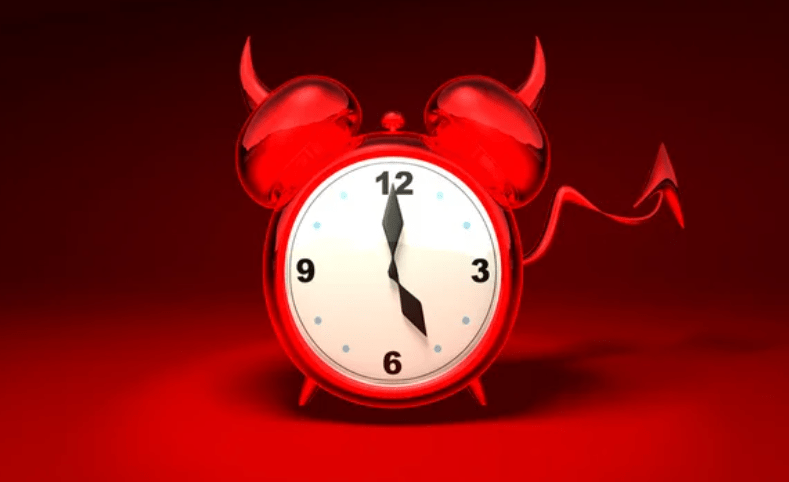
I’ve come to realize that procrastination isn’t just a bad habit—it’s spiritual warfare in slow motion. It’s subtle, deceptive, and deadly. It wears a cozy robe and speaks in soft whispers: “You’ve got time.” “It can wait.” “You’re just tired.” But those whispers are laced with poison. They lull you to sleep while your destiny waits outside your door, untouched.
“The sluggard does not plow in season; so at harvest time he looks but finds nothing.”
—Proverbs 20:4 (NIV)
This verse smacked me in the face today. I wonder how many harvests I’ve missed because I refused to plow in season? How many doors I’ve closed myself because I was waiting for the “perfect” moment that never came?
I know God is gracious. He restores. But I can’t keep banking on grace to bail me out of every delay I choose. That’s not grace anymore—that’s spiritual immaturity.

Lord, forgive me.
Today I looked around and realized how much procrastination has cost me—emotionally, physically, financially, even spiritually. The stress I feel every time I push a deadline is not random; it’s a symptom. A symptom of avoidance. A symptom of fear. And fear…is not of God.
“For God has not given us a spirit of fear, but of power and of love and of a sound mind.”
—2 Timothy 1:7 (NKJV)
Father, help me believe this. Help me walk in the power You’ve already given me. I don’t want to keep putting off my life. I don’t want to waste another hour avoiding the hard things You’ve called me to do.
And that’s the part that’s hitting me hardest right now—You called me. Me. You didn’t give me gifts and dreams just for decoration. You gave them for Kingdom purpose. How dare I keep laying them aside for social media, comfort food, or endless distractions?
How dare I say “maybe tomorrow” when Your Word says:

“Come now, you who say, ‘Today or tomorrow we will go to this or that city…’ Why, you do not even know what will happen tomorrow. What is your life? You are a mist that appears for a little while and then vanishes.”
—James 4:13-14 (NIV)
I’ve been acting like I’m promised time I’ve never been guaranteed.

Holy Spirit, I repent.
I don’t want a hardened heart. I don’t want to keep ignoring that still small voice that says, “Do it now.” I think of Felix in Acts 24—how he heard the truth, trembled at Paul’s words, and still said, “Come back when it’s convenient.” And that convenient moment never came.
How many of us are spiritually waiting for convenience?
No more.
I’m done waiting for a mood, for motivation, for perfect timing. Those things are unreliable idols. They don’t deserve to dictate my purpose. Only You do, God.

I’m not claiming victory over the temptation of procrastination, but today I took a baby step. I wrote this post entry instead of sleeping in. I washed half the dishes instead of all of them—because progress, not perfection. I prayed instead of numbing with a YouTube rabbit hole. It wasn’t big, but it was faithful.
And You meet me in faithfulness.
“Commit your work to the Lord, and your plans will be established.”
—Proverbs 16:3 (ESV)
I’m realizing that procrastination is a form of rebellion—it’s telling God, “I know better than You when and how this should get done.” It’s disobedience dressed up as delay.
Lord, I don’t want delayed obedience anymore. I want a heart that moves when You say move. I want discipline, not because I’m naturally good at it, but because I lean on Your Spirit.
You say the fruit of the Spirit is self-control. So I claim that today. I have self-control in Christ. I can start now. I can finish what I started. I can resist the urge to escape.
God, take my weak moments. Fill them with Your strength.
I don’t need to wait for a better season. This is the season You’ve given me. And I refuse to waste it.
Lord, let me be diligent. Let me be faithful in small things. Help me to show up—even when I don’t feel like it. Help me resist the lies that tell me I’ll never change. Let Your truth override every excuse.
And help me to hold others accountable in love—because if procrastination is killing our generation softly, I want to be a voice that speaks life and urgency and purpose.
I won’t be silent about this. It’s time to wake up.
Resist the Temptation of Procrastination
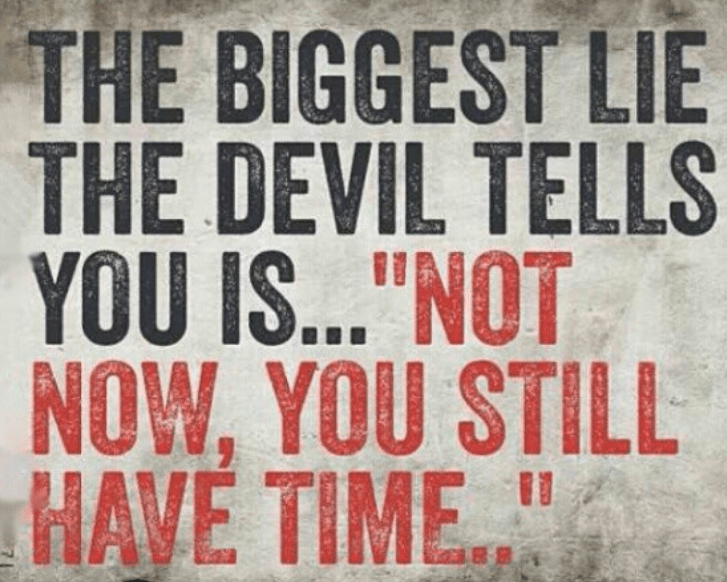
I want to be completely honest with you, I’m still learning. But here’s how God has been teaching me to resist the temptation of procrastination:
1. Call on the Holy Spirit
When I’m tired or overwhelmed, I lean on this promise:
“The Spirit helps us in our weakness…” — Romans 8:26 (ESV)
And when I feel lazy or unfocused, I remind myself:
“For God gave us a spirit not of fear but of power and love and self-control.” — 2 Timothy 1:7 (ESV)
Self-control is not something I produce—it’s a fruit of the Spirit. So I ask Him daily to grow that fruit in me.
2. Take Action by Faith
Sometimes, I have to move before I feel like it. I heard a pastor once say, “Motion activates emotion.” It’s true. Even doing something small (like starting a task for just 15 minutes) can create momentum.
Faith doesn’t always look like big, dramatic acts. Sometimes faith looks like answering that email, or getting out of bed to pray, or finishing what you started.
3. Use Tools—But Start with Prayer
Before I touch my to-do list or planner, I pray:
“Lord, order my steps today. Help me walk in your will, and not waste what you’ve entrusted to me.”
Then I’ll use practical tools like the Pomodoro technique (25 minutes work, 5-minute break) or break a big task into tiny, manageable steps. God is not against structure—He designed order into the universe!
4. Stay Accountable
I’ve asked two godly friends to help me with this. We check in weekly—not to shame each other, but to lovingly remind one another that obedience is worth it.

God, I thank You for revealing to me the spiritual weight of procrastination. Forgive me for every time I’ve ignored Your call, delayed my purpose, or chosen comfort over obedience. Today I choose to trust You with my time, my tasks, and my tiny steps forward. Help me resist fear and distraction. Fill me with the fruit of self-control, and let diligence rise in me like a holy fire. I surrender my timeline to You. In Jesus’ name, Amen.

 The Christian Tech-Nerd