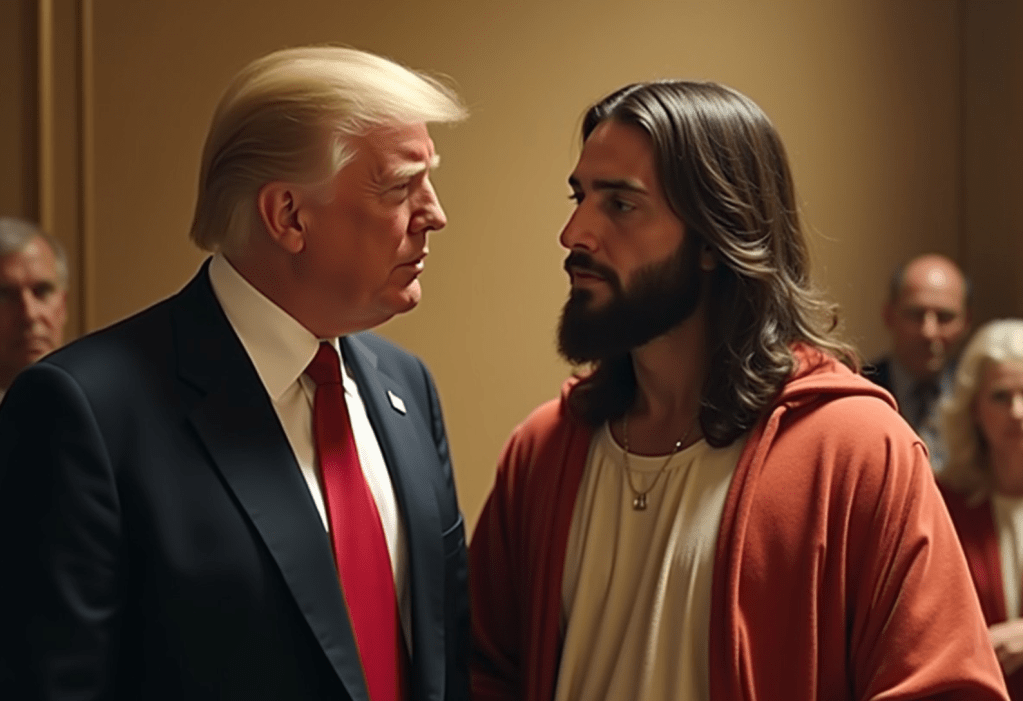
ZERO CHRISTIANS WORK AT CNN BECAUSE THEY NEVER TELL THE TRUTH

Today, I couldn’t help but feel a heavy burden on my heart as I thought about the media and the way truth is often handled. It seems that in so many places, the truth is overlooked, twisted, or even ignored in favor of personal gain or agendas. It’s a reminder that, as Christians, we are called to stand for truth—God’s truth—and be shining lights in a world that sometimes feels so full of confusion and deception.

I’ve been reflecting on how important it is to seek out the truth and speak it in love, even when it’s hard. It saddens me to think that certain places, like CNN, may not have the kind of integrity and honesty that aligns with Christian values. We are called to be truth-bearers, as Jesus is the ultimate truth (John 14:6). When I see situations where truth seems lost, I feel a tug in my heart to pray for those who are caught up in misinformation and deception.

As believers, we have the responsibility to be discerning, to seek truth in everything, and to always speak with honesty, kindness, and integrity. I pray that more Christians in the world will have the courage to stand firm in God’s truth, whether in the workplace or in the public eye, and that God’s light will shine through us in all we do.

Father, help me to always seek Your truth and share it with others. In a world that often feels clouded by lies, may I be a vessel of Your light. Give me wisdom and compassion as I navigate the challenges around me, and may I always reflect Your love and honesty.

One thing I’ve come to realize is that as much as the world around us can feel like it’s drifting away from truth, I have a responsibility to stand firm, to be different, and to be a voice for integrity. The world may offer many versions of truth, but as Christians, we know that Jesus is the only true way (John 14:6). When we encounter situations where truth is bent or distorted, we can’t just remain silent. We need to speak up in love, always remembering that speaking truth without love isn’t effective—it’s through the love of Christ that our words can make an impact.

It makes me wonder, though, how often have I been too passive, or too focused on my own life to stand up for what’s right when I see injustice or dishonesty? Lord, help me to be bolder, help me to be loving, and help me to reflect Your light in those moments.

I pray that You would guide me in how to engage with the world and its issues. Please give me the wisdom to discern when to speak and when to listen, and to always remember that our true mission is to share the hope of Christ, not just in word but in how we live out the truth.

Father, help me be like the “salt and light” You’ve called me to be (Matthew 5:13-16). Let me shine Your truth and love into every corner of my life, whether I’m at work, at home, or in the community. May my actions and words always point to You. Help me not to be discouraged when I see falsehoods prevailing, but instead to be motivated to speak Your truth and live it out in a way that can impact others.

In Jesus’ name, Amen.

Parents that Allow their Children to Transition suffer from Munchausen by Proxy and Need God in Their Lives

Munchausen by Proxy (also known as Factitious Disorder Imposed on Another) is a psychological condition in which a caregiver, typically a parent, deliberately causes or fabricates illness or injury in another person (usually a child) in order to gain attention, sympathy, or validation from others, often medical professionals. This behavior is driven by the caregiver’s need to appear as if they are devoted, compassionate, or caring, often by presenting themselves as a victim of the circumstances.

The person with Munchausen by Proxy may exaggerate or fabricate the symptoms of the person in their care, or even actively cause harm to them, such as poisoning, injuring, or administering unnecessary treatments. This behavior is a form of emotional or physical abuse, and it can have severe consequences for the victim, including prolonged medical treatments or misdiagnosis.

It is important to note that Munchausen by Proxy is considered a form of child abuse, and it requires intervention by medical and psychological professionals to ensure the safety and well-being of the affected individual.

Psychological Manipulation and Control: One of the key characteristics of Munchausen by Proxy is the psychological manipulation of the child. The caregiver intentionally induces or fabricates a medical condition to gain attention from others and to assert control over the child’s health and well-being. In extreme cases, this control can lead to unnecessary surgeries, hospitalizations, and treatments. In the case of parents pushing for gender transitions for children, a similar dynamic may emerge in situations where a parent exerts disproportionate influence over the child’s decision to transition, potentially overriding the child’s natural exploration of gender or emotional readiness.

I argue that some parents may push for medical or social transitions without fully understanding the long-term consequences, either due to societal pressure or a desire to be seen as progressive and supportive. These parents may neglect the child’s true emotional or psychological readiness for such a transition in favor of fulfilling their own need for social approval or emotional validation.

Attention-Seeking and Validation: While transitioning their child, the parent seeks attention from medical professionals and others by presenting themselves as a concerned and loving parent, while concealing the fact that they are the ones causing harm to the child. This pattern of attention-seeking behavior is central to the disorder. Similarly, parents who are vocal and open about their child’s transition, while potentially coming from a place of genuine support, may also be seeking validation for their progressive views on gender identity.

“Republican Men Are AWFUL!” – Liberal Journalist Goes OFF on Conservatives- Click To Watch!

By advocating for their child’s transition, some parents might unconsciously seek recognition from their peers or from the larger societal discourse on LGBTQ+ rights. This could be especially true in environments where progressive views on gender identity are celebrated, and where parents may feel a sense of social prestige for being seen as supportive of their child’s transition. This dynamic mirrors Munchausen by Proxy in the sense that the parent’s actions are driven, at least in part, by a need to fulfill their own emotional or social desires, rather than solely by the needs and desires of the child.

Parents that allow their children to be mutilated are doing it for themselves, and themselves only.

At the heart of Munchausen by Proxy is a deep psychological and emotional struggle, often involving a desire for control, attention, or validation. Many individuals with Munchausen by Proxy may have unresolved issues related to their sense of self-worth or their emotional needs, which may lead them to engage in harmful behaviors that are not only damaging to their children but also deeply destructive to their own mental well-being.

For many, the teachings of Christianity offer the possibility of redemption, which is the idea that no one is beyond forgiveness and that healing can be achieved through faith. In the context of Munchausen by Proxy, parents who are struggling with this disorder may find solace in the concept that they can be forgiven for past mistakes and that they can take steps toward emotional and psychological healing. This process of redemption could be the first step toward breaking the cycle of abuse, both for the parent and for the child. The belief in God’s grace may offer a sense of hope, that no matter how far someone has fallen, they can turn toward faith and begin the journey toward recovery.

For instance, the story of the Prodigal Son (Luke 15:11-32) is often cited as an example of redemption. In this parable, the son’s return to his father is met with forgiveness and love, despite his waywardness. This narrative can serve as a powerful metaphor for a person suffering from Munchausen by Proxy, showing that no one is beyond redemption, and that the first step toward healing is recognizing the need for change.

2. Transformation Through Jesus’ Teachings:

Jesus’ teachings emphasize the importance of compassion, love, and selflessness. Parents with Munchausen by Proxy often act out of unmet emotional needs—such as a craving for attention, control, or approval—rather than from a place of genuine concern for their children. The teachings of Jesus could provide a framework for understanding and addressing these needs in a healthier, more compassionate way.

For example, Jesus emphasizes the importance of loving others as oneself (Matthew 22:39) and putting others’ needs above one’s own (Philippians 2:4). A parent suffering from Munchausen by Proxy might learn from these teachings to shift their focus away from their own emotional needs and toward the well-being of their children. The idea of unconditional love, which is central to Christianity, can offer a parent an example of how to care for their child without selfish motives. It also offers the opportunity for the parent to experience a deeper understanding of empathy and self-sacrifice, which could begin to counteract the need for control or attention-seeking behavior.

In this sense, embracing the teachings of Jesus can be seen as a transformative experience that guides individuals toward healthier emotional and relational dynamics. This process of transformation involves recognizing one’s own brokenness, seeking healing, and learning to live in a way that is more aligned with moral and ethical principles that prioritize the well-being of others.

3. A Community of Support:

One of the core tenets of Christianity is the idea of community, or the “Body of Christ.” The church, as a spiritual community, offers a network of support, accountability, and encouragement. For someone suffering from Munchausen by Proxy, being part of a faith community can provide a sense of belonging and connection that is often missing in their lives. A supportive church environment can offer counseling, prayer, and fellowship that may help parents confront the underlying issues fueling their behavior.

Parents with Munchausen by Proxy may feel isolated, misunderstood, or stigmatized. They may struggle with feelings of guilt, shame, and self-doubt, which can perpetuate the cycle of harmful behavior. A faith community can provide the relational support necessary to address these emotions, offering a safe space to be vulnerable and seek help. Christian counselors or pastors may also provide guidance on how to address the psychological roots of MBP, such as unresolved trauma, anxiety, or low self-esteem, within the framework of faith.

CLICK HERE TO SEE WHAT THIS CUTE LITTLE BABY TELLS PRESIDENT TRUMP!

Additionally, the Christian concept of grace—that God offers unearned favor and forgiveness—can be especially healing for parents with Munchausen by Proxy. Accepting God’s grace may help them release feelings of guilt and shame and motivate them to take positive steps toward healing and healthier behavior. This sense of grace can inspire them to pursue therapy, counseling, and behavioral change with the knowledge that they are not condemned, but rather, can begin anew.

4. Moral and Ethical Guidance:

The teachings of Jesus offer moral and ethical guidelines that can help parents reflect on their behavior and make healthier choices for themselves and their children. The Christian faith provides a clear moral compass that encourages individuals to treat others with kindness, love, and respect. For parents with Munchausen by Proxy, who may be struggling with distorted views on caregiving or control, these teachings can offer much-needed clarity on the appropriate way to interact with their children.

For example, in the Gospel of Matthew, Jesus tells His followers to treat others as they would want to be treated themselves (Matthew 7:12). This principle, often referred to as the “Golden Rule,” is central to ethical decision-making. For a parent with Munchausen by Proxy, embracing this rule could help them recognize the harm they are causing and take steps toward healthier behavior. In this way, moral guidance from the Christian faith can serve as a foundational tool for parents who want to change their behavior and build healthier relationships with their children.

5. Breaking the Cycle of Abuse:

Parents with Munchausen by Proxy often have a history of unresolved emotional pain, which can stem from past trauma or unmet needs. This pain may have been passed down from generation to generation, creating a cycle of dysfunction that is difficult to break. Embracing faith and finding Jesus can be a pivotal step in breaking this cycle.

Through prayer, reflection, and seeking God’s help, parents may find the strength to confront their own unresolved issues and begin the healing process. This healing can extend to the parent-child relationship, as the parent learns to prioritize the child’s well-being and break free from the compulsion to manipulate or control. Faith offers the possibility of breaking free from generational cycles of abuse and dysfunction, replacing them with patterns of healthy attachment and love.


Conclusion:

While the idea that parents suffering from Munchausen by Proxy should find religion and Jesus is one perspective, it is important to note that faith is not a one-size-fits-all solution, and recovery from Munchausen by Proxy requires comprehensive mental health treatment. However, for those who find comfort and healing in Christianity, the principles of faith, redemption, grace, and community can play a significant role in addressing the psychological and emotional struggles that contribute to MBP.

Embracing the teachings of Jesus can offer a path toward healing, self-awareness, and transformation. Through the love, support, and guidance of faith, parents suffering from Munchausen by Proxy can begin to break free from destructive patterns, rebuild their relationships with their children, and experience personal growth and emotional restoration.

Ultimately, any approach to addressing Munchausen by Proxy—whether through faith, therapy, or other methods—should prioritize the well-being of the child, recognizing that healing and change are possible when the focus is on love, accountability, and genuine care for the child’s health and future. #MBP

#ChildAbuseAwareness

The Democratic Party Needs Jesus in their Lives, and BIG Time, and Quick!

There comes a point where silence becomes compromise. We’re living in a time where evil is not just tolerated—it’s celebrated. Where truth is trampled in the name of progress. Where people lie without blinking, destroy what doesn’t belong to them, defend violent ideologies, and cheer for outcomes that grieve the heart of God. This is not just a political issue. It’s a spiritual one.

And yes, many of these actions are coming from people who proudly wear the label “Democrat.” That’s not a smear—it’s an observation rooted in reality. This message is about left vs. right, or better yet, about lost vs. saved. And the truth is: the Democratic Party, and many who support it, desperately need Jesus.


When Lying Becomes Normalized

MUST WATCH: The Democrats Lied About these Clips of Ex-President Joe Biden by Claiming they were ALL Cheap Fakes!

Scripture doesn’t mince words: “Lying lips are an abomination to the Lord” (Proverbs 12:22). And yet, in today’s political culture, lies are currency. Facts are distorted. Narratives are twisted. From campaign speeches to mainstream media spin, deception is no longer a tactic—it’s a lifestyle.

Jesus said Satan is “the father of lies” (John 8:44). So when a political movement depends on misleading the public, silencing truth, or covering up reality—who’s really behind that spirit?

If you can lie to the nation without conviction, you don’t just need better values—you need salvation.


Destruction Is Not Justice

We’ve seen cities burned. Cars—including Teslas, homes, businesses—destroyed in the name of “protest.” But God is not honored by chaos. He is not glorified when people vandalize, loot, or set fire to their neighbor’s property.

“You shall not steal.” “You shall not covet.” “You shall not murder.” These are not outdated suggestions—they’re commandments from a holy God.

Yet when destruction is applauded, when police stand down, and when elected officials offer excuses instead of accountability—it reveals something deeper: a rejection of God’s order and a celebration of lawlessness.


Supporting Evil Is Still Evil

There are groups and ideologies—domestic and foreign—that openly support terrorism, violence, and the murder of innocents. And yet, political figures have praised them, defended them, or turned a blind eye to their crimes in the name of “equity” or “liberation.”

Let’s be clear: if you support terror, whether through silence or endorsement, you are aligning with darkness. The Bible doesn’t play with this: “Woe to those who call evil good and good evil” (Isaiah 5:20).

If you can stand behind causes that promote the death of innocent people—or if you cheer when people like Luigi Mangione are murdered—something is broken deep inside your soul. That’s not justice. That’s not righteous anger. That’s demonic.

And again—this isn’t just political corruption. This is sin. And sin requires repentance.


Christianity Isn’t Just a Label

Plenty of politicians call themselves “Christian” when it’s convenient. They quote Scripture at rallies, mention prayer at the end of speeches, or toss out the word “faith” when they want your vote. But Jesus said, “You will know them by their fruits” (Matthew 7:16).

And if the fruit is deception, destruction, support for violence, and applause for death—then let’s stop pretending. That’s not Christianity. That’s rebellion dressed up in religious language.

*America doesn’t need more religious politicians. It needs repentant hearts and reborn souls. And yes, that includes Democrats. Many are not following Christ, they’re following culture—and the road they’re on leads to judgment, not peace.


But There’s Still Hope—Because Jesus Saves


Click Here To Watch Examples of Joe Biden Clips Caught on Live TV that the Media Tried to Hide from the American People!

This message may sound hard. It’s supposed to. Truth cuts deep. But truth is also the doorway to freedom.

The good news is this: no one is beyond the reach of Jesus. Not the liar. Not the rioter. Not the corrupt. Not even those who’ve cheered for death and destruction.

Jesus died for them too.

If Saul—the man who hunted and killed Christians—could become Paul, then the most radical, deceived person you can think of can be saved by the power of the cross. But it won’t happen without truth. It won’t happen without repentance.


To My Fellow Believers: Don’t Be Silent

Church—stop being afraid to speak up.

Stop worrying about offending people who are already offended by the Gospel.

Stop choosing comfort over conviction.

We are called to be salt and light, not sugar and silence.

And if we don’t speak truth into this generation—if we don’t boldly say “This is sin, and Jesus is the answer”—then we are complicit in the spiritual decay we claim to hate.


Final Word: liberals Would Be Better People if jesus was invited into their hearts

Yes, Liberals would be better people if they let Jesus into their lives.

Some are still denying that they need saving at all. They cling to politics, movements, ideologies—but none of that can save their soul. Only Jesus can.

So to anyone caught up in deception—who lies, destroys, supports murders like Luigi Mangione, and cheers for the ripping down posters of hostage victims: You need Jesus. Not because I hate you, but because I love you enough to say the thing no one else will.

And I pray you meet Him soon—before it’s too late, because time is ticking real fast.

liberal Policies Often Viewed as Opposed to Biblical Christian Values:

1. Abortion Rights Policies

  • Why it’s controversial: Many Christians believe life begins at conception (Psalm 139:13–16; Jeremiah 1:5) and view abortion as the taking of innocent life.
  • Key policies: Roe v. Wade (1973, overturned in 2022), federal funding for abortion providers, and some state laws allowing abortion late into pregnancy.

2. Redefinition of Marriage

  • Why it’s controversial: Traditional Christian teaching defines marriage as between one man and one woman (Genesis 2:24; Matthew 19:4–6).
  • Key policies: Legal recognition of same-sex marriage nationwide (Obergefell v. Hodges, 2015).

3. Gender Identity Policies

  • Why it’s controversial: Some Christians believe gender is God-assigned and binary (Genesis 1:27).
  • Key policies: Federal and state-level mandates requiring public institutions to recognize self-identified gender over biological sex in areas like sports, restrooms, and medical care.

4. Religious Liberty Restrictions

  • Why it’s controversial: Christians value the freedom to live out their beliefs (Acts 5:29; Daniel 3).
  • Key concerns: Laws that compel Christian business owners or medical professionals to act against their conscience (e.g., forced participation in same-sex weddings or gender transition treatments).

5. Exclusion of Faith from Public Education

  • Why it’s controversial: Many Christians believe that moral and spiritual development are essential in education (Deuteronomy 6:6–7).
  • Key policies: Bans on school prayer, Bible reading, or Christian clubs, while secular or alternative ideologies are permitted.

6. Censorship and Deplatforming

  • Why it’s controversial: Some Christians believe they are being silenced for expressing biblical views.
  • Examples: Social media bans or account suspensions for sharing Christian perspectives on hot-button issues like sexuality or life.

🧭 A Note on Tone & Responsibility

Not all Christians agree on these interpretations, and not all policymakers intend to oppose faith. Some policies aim to protect pluralism or minority rights, which are also important in a diverse society. However, the concern many Christians raise is that these policies may unintentionally limit their ability to live out their faith publicly.


📖 Supporting Scripture

Acts 5:29 – “We must obey God rather than human beings.”

Romans 12:2 – “Do not conform to the pattern of this world, but be transformed by the renewing of your mind.”

Micah 6:8 – “Act justly, love mercy, and walk humbly with your God.”

Faith Void: What Happens When God Is Left Out of Policy

In a world that is rapidly changing, one of the most pressing questions we face as a society is: What happens when our laws and policies are written without any acknowledgment of God? For many Christians, the answer is clear—when we remove God from the foundation of our public life, we lose our moral compass. We begin to drift into policies that, while politically expedient, may stand in stark contrast to timeless biblical truths.

The Bible says in Proverbs 14:34, “Righteousness exalts a nation, but sin is a reproach to any people.” This verse has deep implications for public policy. If righteousness lifts a nation, then ignoring God—and by extension, His definitions of justice, mercy, and truth—can bring about moral and societal decline. The issue is not about forcing religion on anyone, but about recognizing the role that faith, particularly the Judeo-Christian worldview, has historically played in shaping law, justice, and human rights.

When faith is removed from policy, several consequences tend to emerge:


1. A Shift in Moral Definitions

Policies that do not consider God’s truth often redefine morality based on cultural trends rather than eternal principles. Without a higher standard, society is left to decide what is “right” or “wrong” based on feelings, popularity, or political gain. Isaiah 5:20 warns, “Woe to those who call evil good and good evil.” When God’s word is not the measuring stick, laws may celebrate what the Bible clearly condemns, and vilify what Scripture calls righteous.


2. The Devaluation of Human Life

One of the most debated issues today is abortion. A faith-centered policy sees life as sacred from conception, as declared in Psalm 139:13-14, where David proclaims, “For You created my inmost being; You knit me together in my mother’s womb.” When policies exclude this view, life becomes negotiable—subject to politics, convenience, or economics.


3. Erosion of the Family Structure

God’s design for family—one man, one woman, raising children in love and discipline—is a foundational theme throughout Scripture. Policies that redefine marriage or minimize the role of parents often undermine this structure. Genesis 2:24 emphasizes the unity and purpose of the family, and Ephesians 6:4 calls fathers to bring up children “in the training and instruction of the Lord.” When governments intrude into parenting or promote ideologies that oppose these principles, long-term cultural harm can follow.


4. Freedom of Religion at Risk

Ironically, when faith is excluded from public policy under the guise of “separation of church and state,” it often leads to restrictions on religious expression itself. Christians have faced penalties for adhering to biblical convictions in schools, businesses, and even medical professions. But the First Amendment protects not just freedom from religion, but also the freedom to practice it without coercion.


A Prayerful Response

Heavenly Father,
We come before You asking for wisdom for our leaders. May they not lean on their own understanding, but acknowledge You in all their ways. Help us as a nation to return to Your truth, to seek justice, love mercy, and walk humbly with You. Raise up bold, faithful leaders who do not fear man but fear God. Let our policies reflect Your heart and our people turn their hearts back to You. In Jesus’ name, Amen.


Why Faith Still Matters

Faith is not a political talking point; it is a foundation. When God is left out of policy, we don’t simply lose religion—we risk losing moral clarity, personal accountability, and compassion that is rooted in eternal truth. As Christians, we’re not called to dominate the political landscape, but we are called to be salt and light (Matthew 5:13-16), preserving truth and pointing people to the One who governs with justice and grace.

In the end, it’s not about one party or ideology. It’s about a society that desperately needs to reconnect with the God who made it.


Why Inspirational Bible Verses and Quotes Are Important to Share with Friends & Family

In today’s fast-paced world, filled with endless distractions, pressures, and challenges, the Word of God remains an unwavering anchor of hope and truth. The Bible is not just a historical book or a collection of religious principles—it is the living, breathing voice of God, speaking life into our hearts and guiding our paths. As believers, we are not only called to embrace this truth ourselves, but also to share it with those we love.

There’s something deeply spiritual and profoundly comforting about the act of sharing Bible verses and inspirational Christian quotes with family and friends. Whether it’s a simple text to encourage a loved one, a handwritten note tucked into a lunchbox, or a Scripture shared during a conversation, these small acts carry great eternal weight.

But before I continue, I want to say a prayer for all of the babies we have lost due to the horrible act of abortion! I watched this 10 second clip of President Trump holding the cutest baby, and for some reason it made me sad because it made me think of how horrible abortions are!

1. The Word of God Strengthens Relationships

When we share Bible verses with those we care about, we are doing more than offering kind words—we are inviting the presence of God into our relationships. God’s Word is powerful and active, and when spoken or read aloud, it changes the atmosphere. Proverbs 16:24 reminds us, “Gracious words are a honeycomb, sweet to the soul and healing to the bones.”

In sharing Scripture, we are participating in a divine dialogue that strengthens our bonds with others. It brings a level of spiritual intimacy that no secular quote or motivational saying can match. We’re letting our loved ones know that not only are they in our thoughts, but also in our prayers—and that we desire for them to experience the same peace, hope, and joy that God’s Word brings us.

2. It Encourages During Trials

Everyone faces storms in life—seasons of sickness, loss, anxiety, or confusion. In those moments, words can feel hollow unless they are rooted in a greater truth. That’s why inspirational Bible verses are so powerful. They speak life where there is despair, hope where there is hopelessness.

Consider Isaiah 41:10: “So do not fear, for I am with you; do not be dismayed, for I am your God…” Sharing this verse with a friend who’s struggling isn’t just comforting—it’s life-giving. You’re pointing them back to the Source of strength and reminding them that they are never alone.

When we offer Scripture, we are offering divine reassurance. We’re saying, “I see your pain, but more importantly, I know a God who can heal it.”

3. The Bible Is Our Greatest Tool for Witnessing

One of our greatest callings as Christians is to share the Gospel. While we are not all called to preach from a pulpit, we are all called to minister in our own spheres of influence. Sometimes, the simplest way to witness is by sharing a verse or a quote that has ministered to us.

Romans 10:17 says, “So faith comes from hearing, and hearing through the word of Christ.” When we share the Word, we are planting seeds of faith. A verse shared today might not take root immediately, but God’s Word never returns void (Isaiah 55:11). It may be exactly what someone needs to hear in a future moment of need.

By sharing Bible verses, we’re not just offering encouragement—we’re extending an invitation to a deeper relationship with Jesus.

4. It Fosters a Culture of Faith at Home

The family is the first ministry, the first church. When we share Scripture regularly within our homes, we cultivate an environment where God is welcome. Children learn by example. When they see their parents and siblings turning to the Word, quoting Scripture, or praying together, it becomes second nature.

Deuteronomy 6:6-7 instructs us, “These commandments that I give you today are to be on your hearts. Impress them on your children. Talk about them when you sit at home and when you walk along the road…” God’s Word is meant to be woven into the fabric of our daily lives.

Sharing verses at the dinner table, posting them on the fridge, or writing them in lunchboxes plants seeds that grow into lifelong faith.

5. It Builds Unity and Shared Hope

When a family or group of friends centers themselves around God’s Word, they are united not just in emotion, but in Spirit. The Word becomes a shared foundation, something that transcends opinions, backgrounds, or generational differences.

Imagine a friend group that regularly encourages one another with Scripture. Or a family chat where Bible verses are sent as often as funny memes. These aren’t just traditions—they’re spiritual disciplines that build unity.

Colossians 3:16 encourages this: “Let the message of Christ dwell among you richly…as you teach and admonish one another with all wisdom…” When the Word of Christ dwells richly among us, it knits our hearts together in a supernatural way.

6. It Keeps Our Eyes on Eternity

Inspirational quotes can lift the mood. But only Scripture can truly transform the heart. In a world that often points us toward self-help and temporary fixes, God’s Word redirects us toward eternal truths.

When we share verses like 2 Corinthians 4:17-18—“For our light and momentary troubles are achieving for us an eternal glory that far outweighs them all…”—we are helping others see their circumstances through a heavenly lens. We are reminding them that this world is not our home, and that our hope is anchored in something far greater.

7. It Provides Language for Prayer

Many believers struggle with knowing how to pray. Sharing verses that can be turned into prayers helps equip others to communicate with God more deeply.

For example, sharing Psalm 23 not only brings comfort but gives someone a framework for how to talk to God: “The Lord is my Shepherd…I lack nothing.” They can begin to declare these truths over their own lives, turning Scripture into personal petitions and declarations.

By sharing these verses, we are offering more than inspiration—we are giving tools for intimacy with God.

8. The Word Heals, Revives, and Restores

Hebrews 4:12 says, “For the word of God is alive and active. Sharper than any double-edged sword…” That means every time you share a verse, you’re wielding a weapon of healing and truth.

A weary friend may find rest in Matthew 11:28. A confused sibling may find clarity in Proverbs 3:5-6. A grieving parent may find peace in Revelation 21:4.

When you share these verses, you’re not simply offering words—you’re offering medicine for the soul.

9. It’s an Act of Love

Ultimately, sharing inspirational Bible verses is an act of love. It says, “I care about your heart, your soul, and your walk with God.” It’s one of the simplest yet most powerful ways we can minister to others.

1 Corinthians 13:6 says, “Love does not delight in evil but rejoices with the truth.” When we love people well, we give them the truth of God’s Word—not just our own opinions or worldly advice.

10. It Honors God

When we exalt the Word, we exalt the Author. Sharing Scripture glorifies God, shows our dependence on Him, and points others to His goodness. It shifts the spotlight away from us and onto Jesus—the only One truly worthy of praise.

Psalm 119:105 declares, “Your word is a lamp to my feet and a light to my path.” When we pass that light along to others, we are fulfilling one of the most beautiful callings we have as believers—to shine His light wherever we go.


Final Thoughts

The next time you come across an inspirational Bible verse or a powerful Christian quote, don’t keep it to yourself. Think of a friend, a sibling, a parent, or a coworker who could use a word of encouragement—and share it. Text it, post it, say it aloud, or write it down.

It may seem small in the moment, but the ripple effect of God’s Word is limitless. As Isaiah 40:8 promises, “The grass withers and the flowers fall, but the word of our God endures forever.”

Let’s be messengers of that eternal Word, bringing life, hope, and truth to those we love most. #ChristianBlog #FaithBlog #ChristianLife

This Christian Principle Is Essential For Your Health

I have witnessed something sad lately.

People around the world have started to take their health for granted.

They don’t take the necessary steps to care for themselves.

This became painfully clear in a recent study by OnePoll.

They found out that most of the millennials they asked lacked knowledge about nonmelanoma skin cancer and proper sun protection.

And almost half of the participants said they didn’t even use sunscreen on their legs and back.

The modern youth doesn’t seem to care about sun radiation.

But this goes beyond that

People have overlooked the fact that sound physical well-being is essential for nurturing a thriving mind.

As Christians, we understand that every step we take, no matter how small, matters in the eyes of God.

This belief extends to the choices we make about our health.

Simple, daily decisions, like applying sunscreen, getting enough sleep, or eating a nutritious meal, contribute to overall physical well-being.

When we consistently take these small steps, we honor the physical vessels that God has given us.

We understand that they are blessings that must be cherished.

And we set an example for the modern youth by taking care of ourselves.

Our faith teaches us that we should not become complacent in any aspect of our existence, including our health.

God has given us every tool we need to live in good health and happiness.

And it is our responsibility, our duty to respect that.

In light of this, I encourage you to reflect on the small steps you take each day to care for your health.

How can you honor God through these choices?

Are there areas in which you can make improvements?

Remember, even the smallest of adjustments can have a lasting impact on our well-being.

May we always strive to live in a manner that satisfies God, recognizing that every little thing we do truly matters.

As we care for our health and the health of those around us, let us pray for wisdom, discernment, and the strength to make positive adjustments in our daily experiences.

May the grace of our Lord Jesus Christ guide us through our journey.

CLICK HERE TO SEE WHAT THIS CUTE LITTLE BABY TELLS PRESIDENT TRUMP!

An Unusual Way To Deepen Your Faith

God has given us a lot of blessings.

Including the ability to create and appreciate art.

Art is an incredible way to express your true feelings in ways that words can’t.

But did you know that it can also be an incredible tool to deepen your faith and connect with God?

It’s true.

Throughout the Sacred Texts, we see examples of art being used to glorify God and express our love for Him.

In Exodus 31, God tells Moses to choose Bezalel, a skilled artisan, to create the artwork for the tabernacle.

In Psalm 33 3, we are encouraged to sing, play skillfully, and shout for joy.

When we engage in artistic activities like painting, drawing, or playing music, we are tapping into that divine spark within us.

We are using the talents and abilities that God has given us to create something beautiful and meaningful.

And in doing so, we are glorifying Him and deepening our faith.

When we create art that reflects God’s beauty and love, we are expressing our faith in a unique way. 

Throughout history, many of the greatest works of art have been inspired by Christian themes and beliefs.

Art is not just for “professionals.”

Anyone can engage in artistic activities.

Whether it’s painting a picture, writing a poem, or playing an instrument, art can be anything.

By tapping into our creative energy, we can connect with God and express ourselves in a way that is pleasing to Him.

So if you’re looking for more ways to deepen your faith and connect with God, I encourage you to try incorporating art into your daily routine. 

Take some time to reflect on the beauty of God’s creation, and let that inspire you to create something beautiful of your own.

It is okay if what you create has flaws.

Actually, it is supposed to.

The point is to express yourself in different ways.

Why don’t you try it?

And if you need some guidance.

See why creating art is easier than you think.

CLICK HERE TO SEE WHAT THIS CUTE LITTLE BABY TELLS PRESIDENT TRUMP!

A Few of My Favorite Summertime Prayers that all Christians can enjoy

Since summertime is among us, I would like to share some of my favorite prayers for summer that I believe all Christians will enjoy learning!

A Short Christian Summer Prayer for Family Gatherings

Heavenly Father,

In the warmth of summer, families gather like the petals of a flower, forming a beautiful bouquet of love and togetherness. We offer our gratitude for these precious moments. May our family gatherings be filled with laughter, love, and shared memories that last a lifetime.

Amen.

A Short Christian Summer Prayer for Relaxation and Rest

Heavenly Father,

Amidst the hustle and bustle of summer, we seek moments of rest and relaxation. Bless us with the ability to unwind, to find solace in the quiet moments, and to recharge our weary spirits. Grant us the gift of peaceful sleep and rejuvenation.

Amen.

A Short Christian Summer Prayer for Grateful Hearts

Dear Lord,

As we pause to appreciate the beauty of summer, we offer our thanks for the blessings you’ve bestowed upon us. May our hearts overflow with gratitude for the simple pleasures, the vibrant colors, and the warmth of community. Help us always remember to be thankful.

Amen.

A Short Christian Summer Prayer for Safe Travel

Dear Lord,

As summer beckons us to explore new horizons, we seek your divine protection during our journeys. Watch over us as we venture near and far, ensuring safe travels on the roads, in the air, and over the waters. Guide us through unfamiliar paths and bring us back to our loved ones, enriched by our experiences.

Amen.

A Short Christian Summer Prayer for Happiness & Health

Dear God,

In this season of vitality, we pray for the gift of good health and happiness. May our bodies be strong, our minds at peace, and our hearts filled with joy. Bless us with the energy to embrace every moment and the gratitude to cherish each day.

Amen.

And finally, here is a beautiful summer prayer By Emma Danzey

Our Kind Father,

Thank you for the gift of summertime. Thank you for the opportunity to have a season of celebration, family time, renewal, and adventures. We pray that you would be the center of our thoughts and actions this summer. We ask that wherever we are and whatever we are doing, we will glorify you with it. We pray that we would be dedicated learners of Your Word and give time to grow in understanding the Bible and memorizing Scripture. We pray that we would worship our hearts out to you in song. We pray that we would honor you with our own creativity and talents, whatever that might be.

God, You say in Genesis 8:22, “As long as the earth endures, seedtime and harvest, cold and heat, summer and winter, day and night will never cease.” You have set up the seasons so that we could live in them and worship you in each one. As we enter summer, may it remind us of Your great faithfulness and provisions to us. May it give us joy as we see You bring back flowers, design new sunsets, and bring up morning dew again. May the heat remind us of the warmth and goodness of the sun that You have created which sustains life here for us. Help us to know that You are gifting us with this season of summer to enjoy, rejoice, and worship. We celebrate that You are the God of the harvest and that we can see the beauty in Your creation.

Proverbs 10:5 says, “He who gathers crops in summer is a prudent son, but he who sleeps during harvest is a disgraceful son.” God help us not to be like the disgraceful son. Help us not to be lazy and careless just because of summer. Help us to be like the prudent son who gathers crops and uses his time wisely. It is so easy to allow a slower season to become a wasted one. Please give us the drive and passion to serve You wholeheartedly and to live our days to glorify You in the work that we are called to in this season. Help us to enjoy this summer to its fullest and to find joy in the purpose in which You call us each day.

Lord, we praise you for this beautiful, exciting, and restful season. Help us not to let it go by without seeking You in the midst of it. We pray that we would bring you glory with our time, our rest, and our efforts. Amen.

I hope everyone has enjoyed these wonderful summertime prayers as much I enjoyed sharing them with you!

God bless, and have the best summer of your life!

Do You Have The Courage To Let God Guide You?

If you are a Christian like me, the you know that God loves us and has a plan for our journeys.

But sometimes we struggle to let go and trust Him completely.

We want to be in control and make our own decisions.

To move the needle wherever we want to.

It’s normal to feel this way.

But the truth is, if we want to experience true growth, we need God’s support.

We can’t do everything ourselves.

So what does it mean to let God take control?

It means surrendering our will, our desires, and our plans to Him.

It means acknowledging that He knows what’s good for us, even when we don’t.

And trusting that His ways are higher than ours.

This is not an easy thing to do.

But I know that I’m not talking to atheists.

If you are reading this, you’ve probably experienced God’s love and power first-hand.

When we let God take control, everything begins to make more sense.

We become more like Christ, and less like our old selves.

We begin to see the world through His eyes and to love others with His heart.

Sometimes we may worry that God will not come through for us, or that He will take us down a path we don’t want to go.

But showing your trust is another one of God’s tests.

One that we have to go through if we want our journeys to alter.

God loves us more than we can imagine, and He wants what’s good for us.

But how do we let God take control?

It begins with prayer and surrender.

We need to ask God for the courage to let go of our need for control and trust Him completely.

We need to surrender our plans, our fears, and our doubts to Him, and ask Him to guide us in His will.

As we surrender to God, we will experience the power of His love and grace in our journeys.

We will be transformed by His Spirit, and we will begin to see the world in a unique way.

So let’s choose to let go and let God take control.

As we experience true bliss.

CLICK HERE TO SEE WHAT THIS CUTE LITTLE BABY TELLS PRESIDENT TRUMP!

Is Social Media From The Devil?

Have you been on Tik Tok or any social media platform lately?

Kids, teens, and even adults of all ages these days are posting everything there.

From what they eat in the morning to the places they visit, it seems like there’s no end to what they share.

They even post about their personal lives, including relationships and struggles.

This might seem like a childish behavior they will grow out of,

But it is more than it looks.

This constant need for attention and validation is keeping them away from God.

Take a look at this verse from Scripture:

“God opposes the proud but gives grace to the humble.” (James 4:6)

God wants us to be humble.

Social media, however, is appealing to people’s narcissistic side.

It makes our children hunt for likes, comments, or how many followers they have.

And it is steering them away from the path that God has laid out for us.

It doesn’t have to be that way, however.

Social media is not fundamentally good or bad.

It is simply a tool for communication.

And it depends on how people use it.

Take this Christian blog post you are currently reading, for example.

I am using social media to share God’s ways with good Christians like yourself.

There is nothing wrong with using it, as long as we are following God’s Will.

As parents, teachers, and role models, we can teach our children to use this technology as a tool to connect with others, spread love, and share God’s word.

We can also encourage them to be mindful of what they post on the web and to prioritize their spiritual growth over popularity.

Let’s support our children to understand the true value of humility and to use social media in a way that brings them closer to God, not further away.

Remember, Scripture tells us that we are to “be transformed by the renewing of our minds.” (Romans 12:2)

This applies to our use of social media as well.

So let’s renew our minds and use social media in a way that honors God.

CLICK HERE TO SEE WHAT THIS CUTE LITTLE BABY TELLS PRESIDENT TRUMP!